Data
Data mesh architecture
Data mesh architecture is a decentralized design in which domain teams publish their data as products on a shared platform, under common governance rules.
Teams move to a data mesh when a central data team has become the bottleneck for the whole company. Every new dataset waits in the same queue, and the engineers building the pipelines know the least about what the data means. A mesh hands ownership to the teams that create the data.
What are the four principles of a data mesh?
- Domain ownership. The team that runs a business area, such as claims, owns its analytical data as well as its systems.
- Data as a product. Each dataset is published for other people to use, with an owner, documentation, quality checks and a commitment to keep it working.
- Self-serve data platform. A platform team provides storage, pipelines, cataloging and access control as a service, so a domain can publish a product without building infrastructure.
- Federated computational governance. Domain and platform representatives agree a small set of global rules, and the platform enforces them in code.
What are the parts of a data mesh architecture?
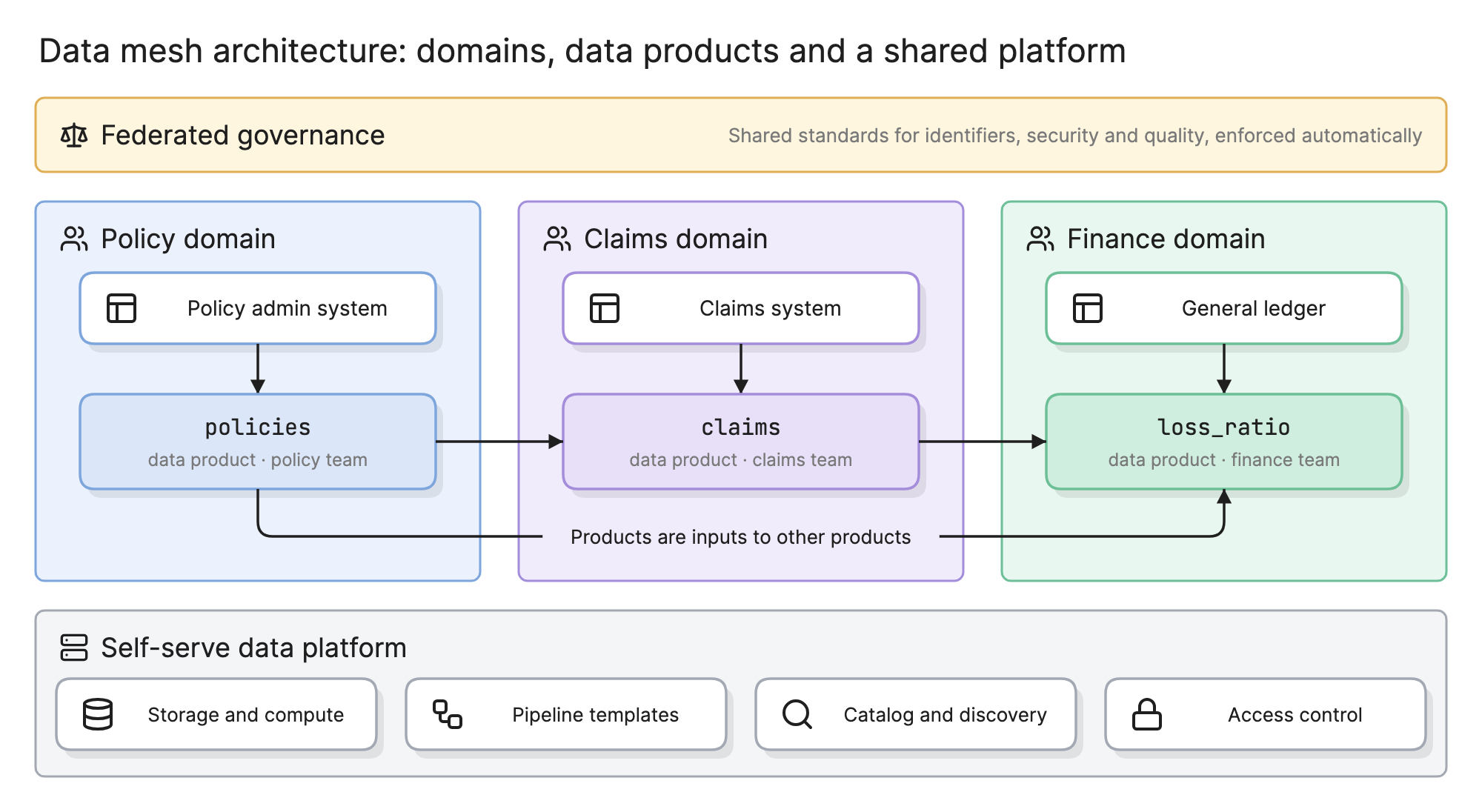
The diagram at the top of this page shows a mesh at an insurer.
- Domains. Business areas with their own teams and systems: policy, claims and finance.
- Data products. The unit of the mesh.
policies,claimsandloss_ratioare each owned by one team and consumed by others. - The platform. The grey band at the bottom. One set of tools that every domain uses.
- Governance. The band at the top: shared identifiers, security classifications and quality standards.
- Consumers. Other domains, analysts and models, who find products in the catalog and read them through published interfaces.
What is a data product?
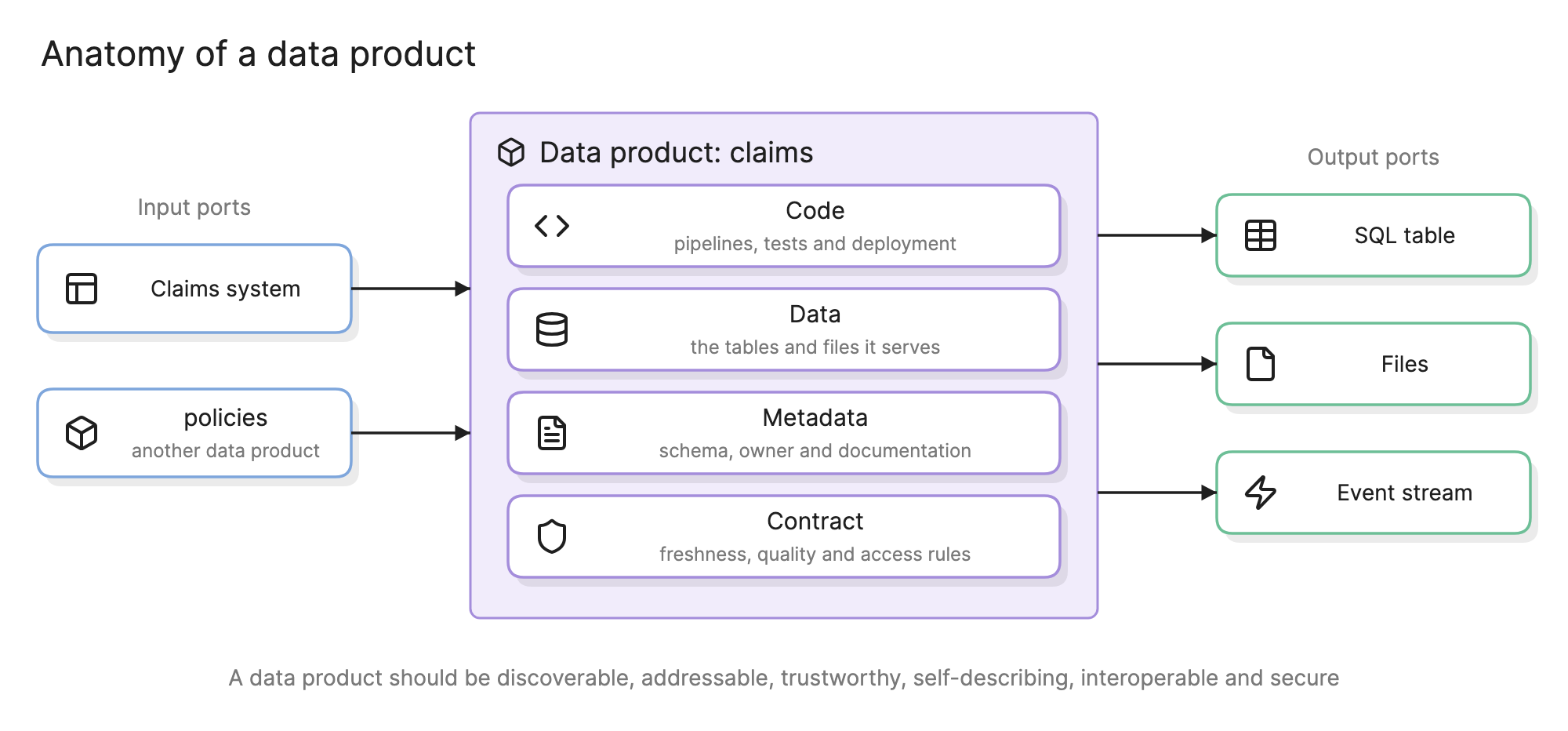
A data product is more than a table. It bundles the code that builds the data, the data itself, the metadata that describes it and a contract that states its freshness, quality and access rules. Data arrives through input ports and leaves through output ports, which may be a SQL table, a set of files or an event stream.
| Type | Built from | Example |
|---|---|---|
| Source-aligned | One operational system | policies, claims |
| Aggregate | Several data products | customer_360 |
| Consumer-aligned | Other products, shaped for one use | loss_ratio for finance reporting |
A product is worth publishing only if it is easy to find, has a stable address, can be trusted, describes itself, works with other products and is secure.
How do you read a data mesh architecture diagram?
Read the hero diagram one column at a time. In the policy domain, the team runs the policy admin system and publishes policies from it. The claims team does the same with the claims system. The arrows between products show reuse: claims reads policies, and the finance domain’s loss_ratio is built from both.
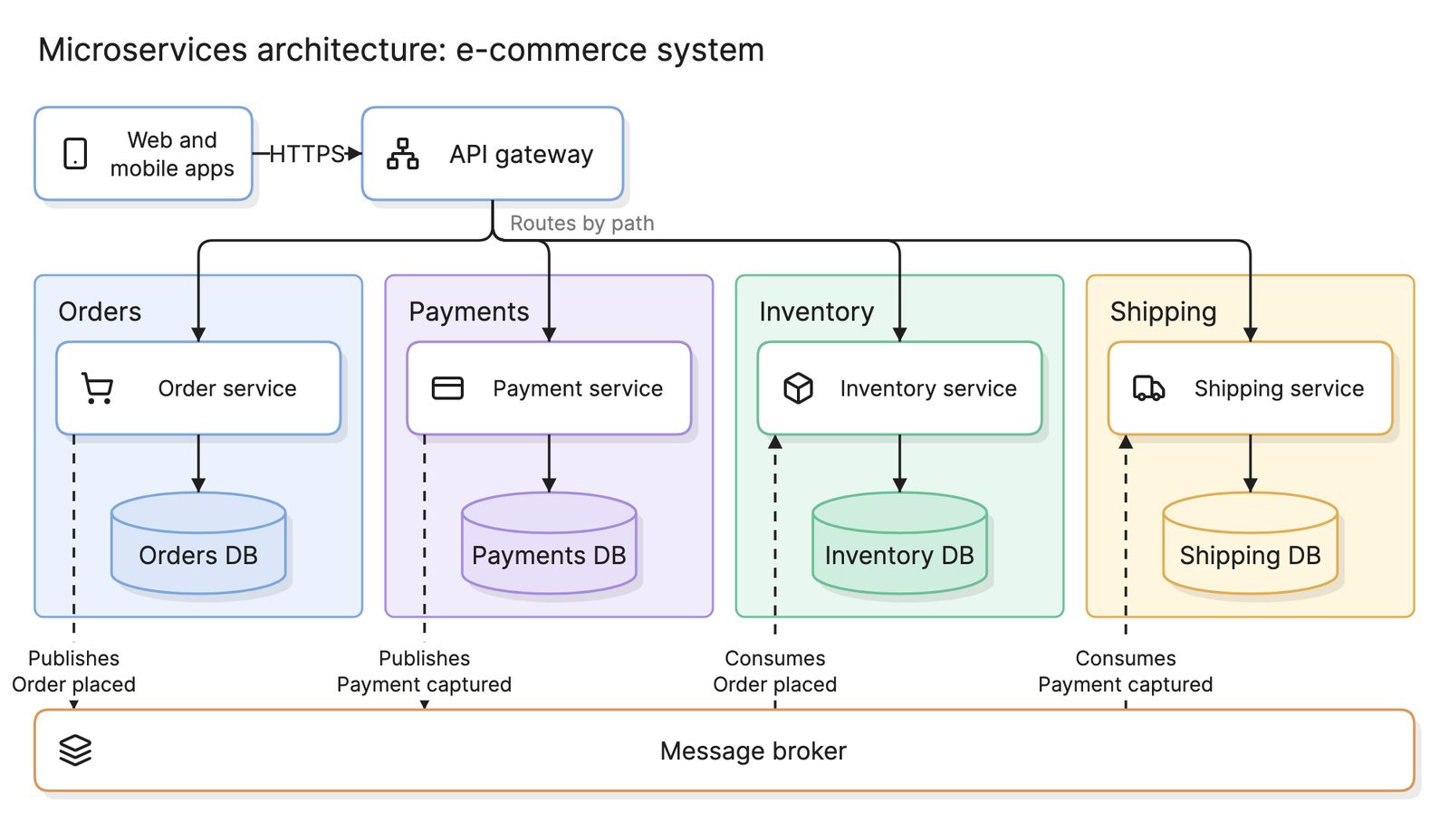
Then read the bands. Every domain builds on the same platform, so nobody runs a private stack, and the governance band applies to every product. The structure will look familiar from microservices architecture: the same idea of small teams owning what they build, applied to analytical data.
The diagram raises the questions that decide whether a mesh works. Who is the named owner of each product? What happens to loss_ratio when the claims team renames a column? Can a new domain publish without help from the platform team?
How does a data mesh compare with a centralized data platform?
| Centralized lake or warehouse | Data mesh | |
|---|---|---|
| Owner of the data | A central data team | Domain teams |
| Unit of delivery | Tables in one store | Data products with contracts |
| Bottleneck | The central team’s backlog | Platform maturity and domain skills |
| Governance | Applied by the central team | Agreed together, enforced by the platform |
| Fits | A few domains and one data team | Many domains, each with engineers |
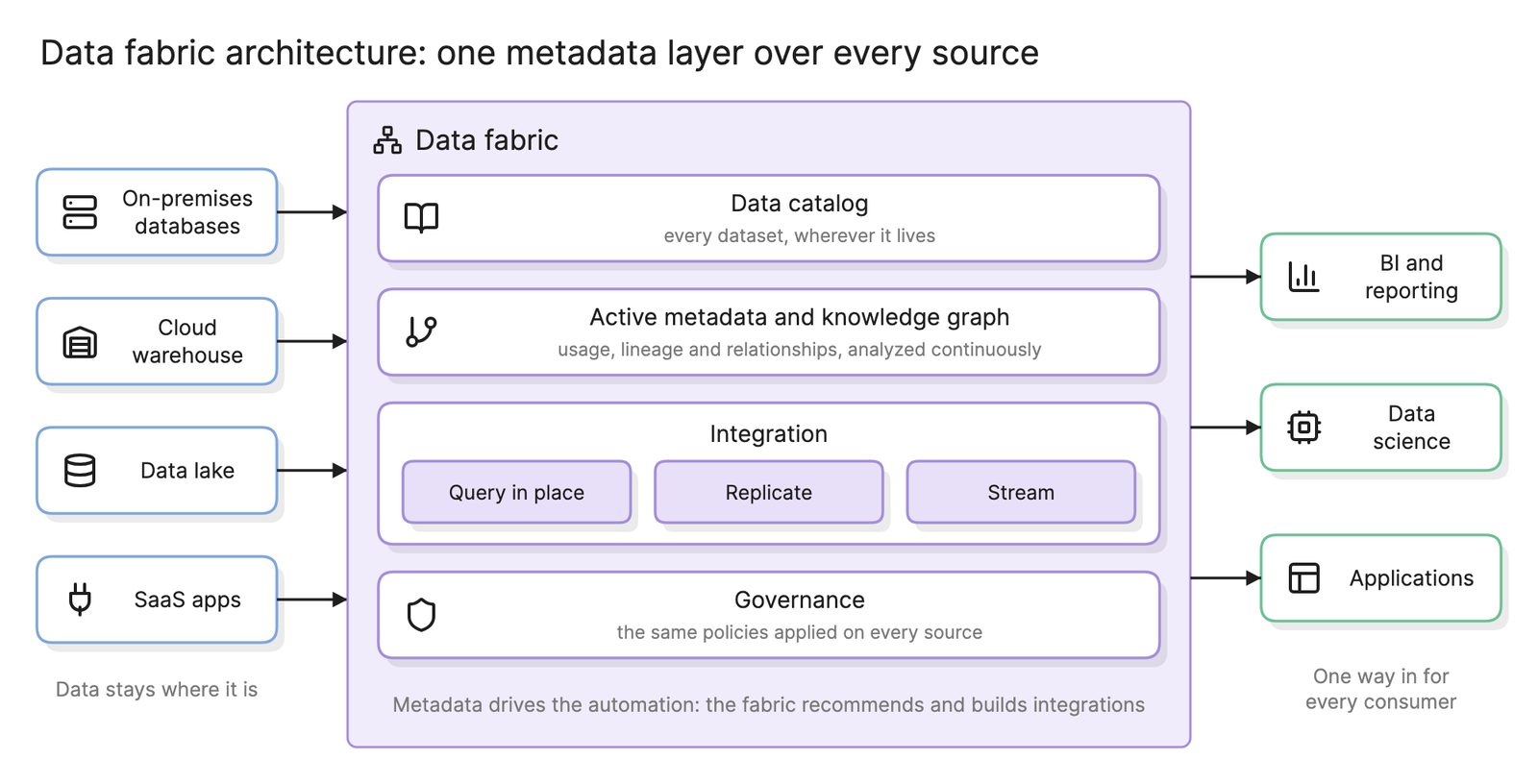
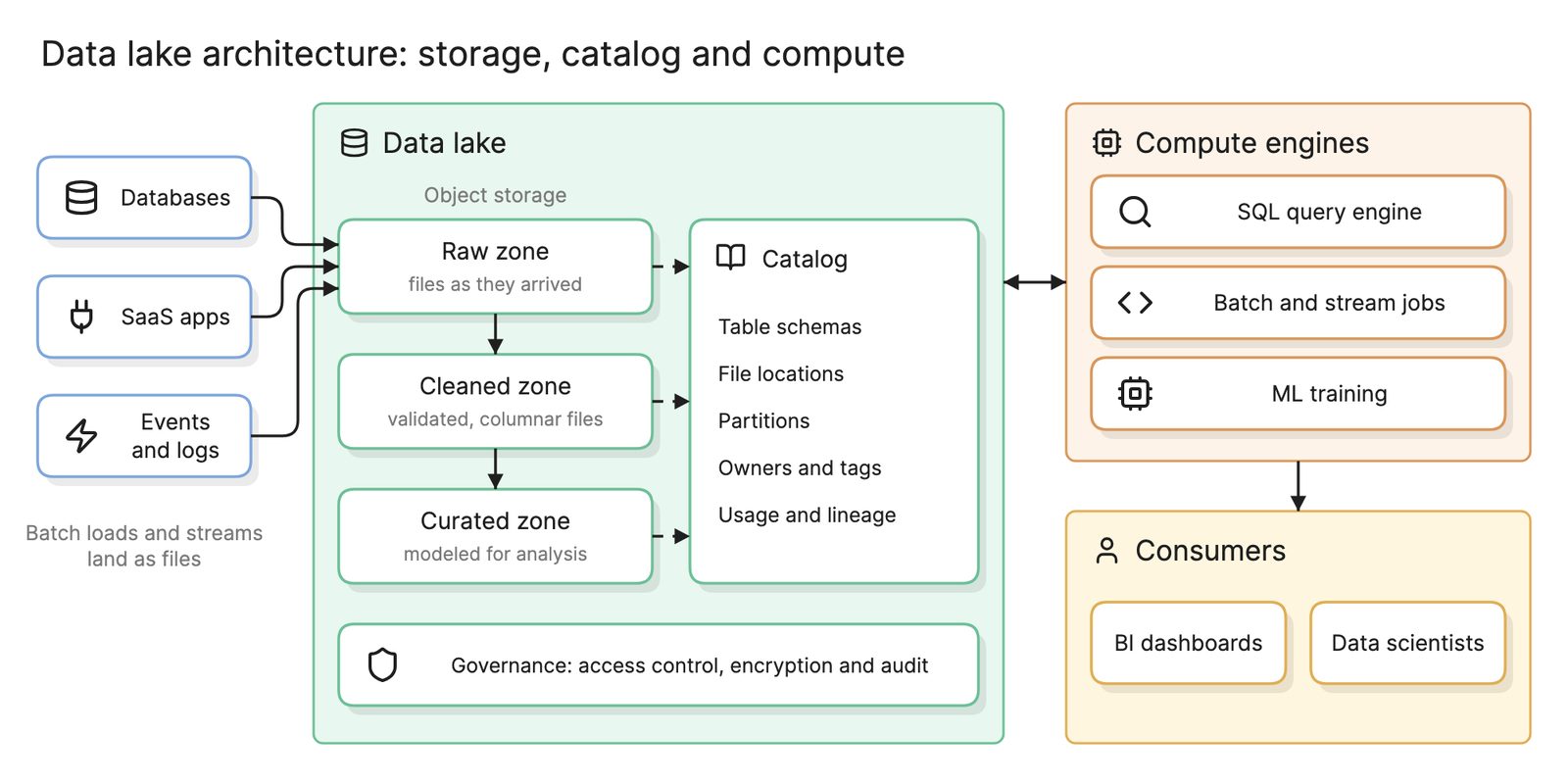
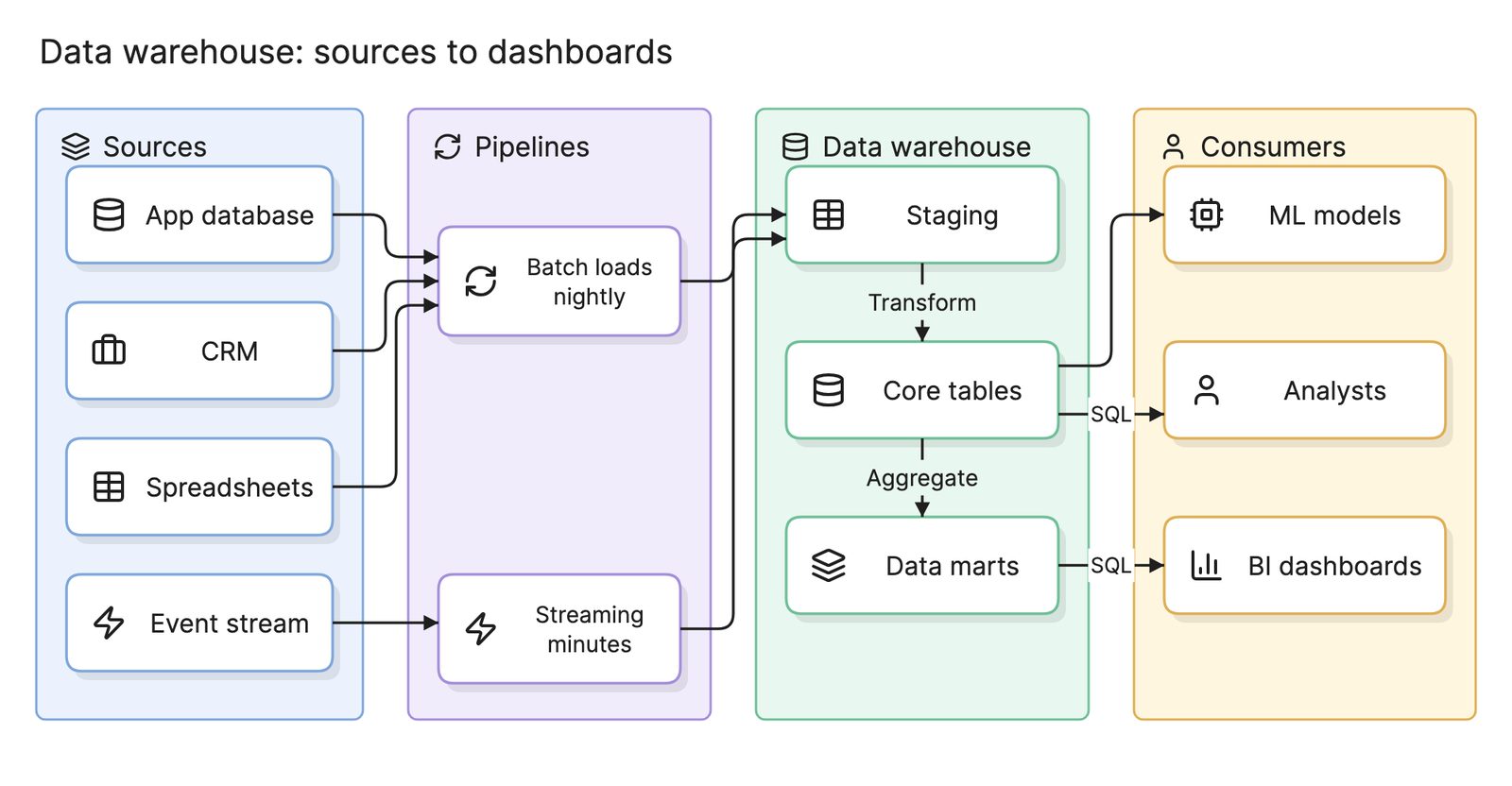
A mesh does not replace storage. Its products usually live in a data lake or a data warehouse, often the same one as before. A data fabric is the technology-led alternative, and the two can be combined.
How do you adopt a data mesh?
- Check that you have the problem. A mesh answers a scaling problem. If the central team is keeping up, keep it.
- Start with two or three domains. Pick ones with engineers and a willing owner.
- Define a data product. Agree the minimum: an owner, a schema, documentation, quality checks and a freshness commitment.
- Build the platform thin. Templates for a pipeline, a catalog entry and access rules are enough to start.
- Agree the global rules. Common identifiers, data classifications and how access is requested.
- Measure use. Count the consumers of each product and the time it takes to publish a new one.
- Draw the mesh. An architecture diagram of domains, products and their consumers shows who depends on whom.
What are common data mesh mistakes?
- Renaming the central team. If one team still builds every pipeline, nothing has changed.
- Domains without engineers. Ownership without the skills to act on it produces neglected products.
- No platform. Each domain builds its own stack and the silos return.
- Products nobody uses. Publish for a known consumer, not for completeness.
- Governance by committee. Rules that are not automated are not followed.
What tools help with a data mesh?
- Data platforms and catalogs. A shared lake or warehouse with a catalog where products are registered, searched and requested.
- Data contracts and quality tools. Schema definitions and tests that run in each product’s pipeline and fail the build when a contract is broken.
- AI diagramming tools. Tools like Eraser turn a description of your domains, data products and platform into an architecture diagram you can keep editing as text, which helps when the map of products changes every quarter.
For more on this kind of diagram, see architecture diagrams.
Frequently asked questions
-
What are the four principles of data mesh?
Domain ownership, data as a product, a self-serve data platform and federated computational governance. They come from Zhamak Dehghani, who introduced data mesh in 2019. Together they say that the teams closest to the data should own it, treat its consumers as customers, build on shared infrastructure and follow global rules that the platform enforces automatically.
-
What is the difference between data mesh and data fabric?
A data mesh is an operating model: it changes who owns the data, moving it to domain teams. A data fabric is a technology approach: a metadata layer that finds, integrates and governs data wherever it lives. They solve different problems, and a fabric can serve as part of the platform under a mesh.
-
What is the difference between a data mesh and a data lake?
A data lake is a storage architecture. A data mesh is an ownership model. A mesh often stores its data products in a shared lake or warehouse; what changes is that each product has a domain team responsible for its quality, documentation and availability, instead of one central team owning everything.
-
When is a data mesh the wrong choice?
When the organization is small, has only a few data domains or has a central data team that is keeping up. A mesh also fails where domain teams have no engineers to own data, because ownership without skills produces neglected products. It is a response to scale, and it has real platform and coordination costs.