Enterprise reference architecture of a city
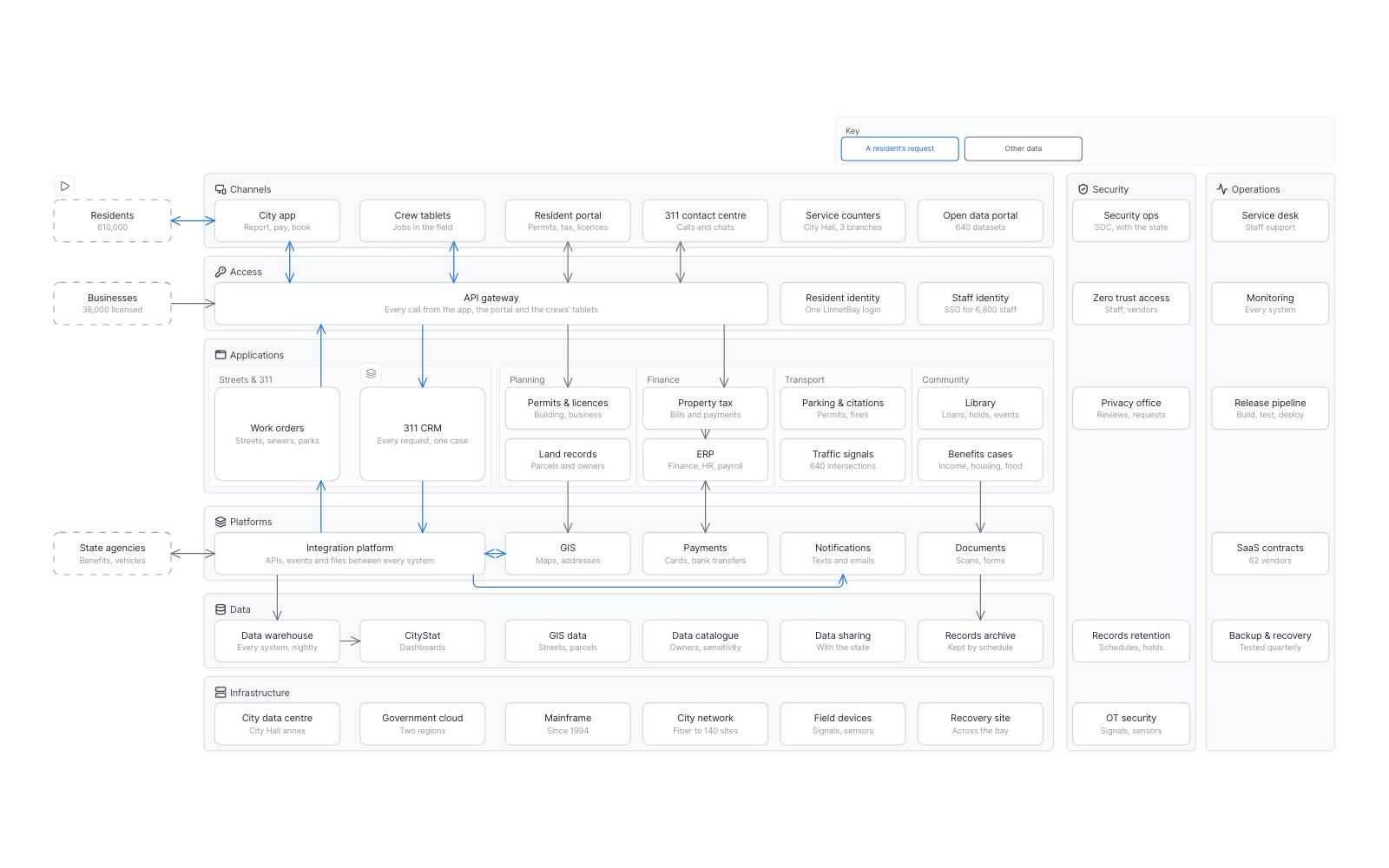
The City of Linnet Bay’s reference architecture, without a capability map: wired along a 311 request, then by the resident data each block holds and by who runs it.
 Architecture
 Security
 Enterprise architecture
 Data classification
 Data flow diagram
 Drill-down
 Public sector
Views in this map
- 1 Reference architectureEvery block the city runs, layer by layer, wired along a resident’s 311 request.
- 2 Resident dataWhere residents’ data is kept and where it flows: sensitive, personal or none.
- 3 Who runs itEach block by who runs it: Digital Services, a department, a vendor or the state.
- 4 311 CRMOne case per request: checked, prioritised, then sent to the system that owns it.
Reference architecture ‹ › Resident data ‹ › Who runs it · Reference architecture ▸ 311 CRM
Flows to play
- A pothole reportFrom a photo in the City app to a crew’s tablet, and a text when it’s fixed. In the Reference architecture view.
- Where her details goThe same report, by what it carries: her name stays in the 311 case. In the Resident data view.
- One case, step by stepA second pothole report joins the first, and the crew gets one job. In the 311 CRM view.
The model behind it
55 records of 10 types. Every box on the map is one of them, so the filters and the record panel read the same data.
-
 Applications 10
-
 Channels 6
-
 Data 6
-
 Infrastructure 6
-
 311 CRM steps 6
-
 Shared platforms 5
-
 Security 5
-
 3 more types 11
Filters
Resident data and Run by and Department and Layer: pick a value and everything else fades.
More map examples
View all map examples →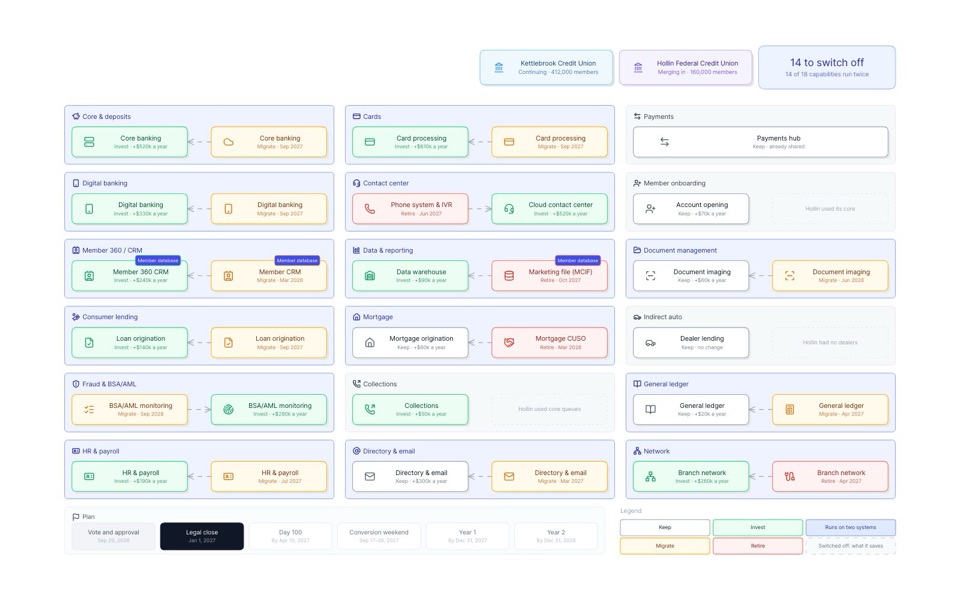
Application rationalization after a credit union merger
Two credit unions’ 32 systems in one capability grid, stepped down to one system per capability by 2028.
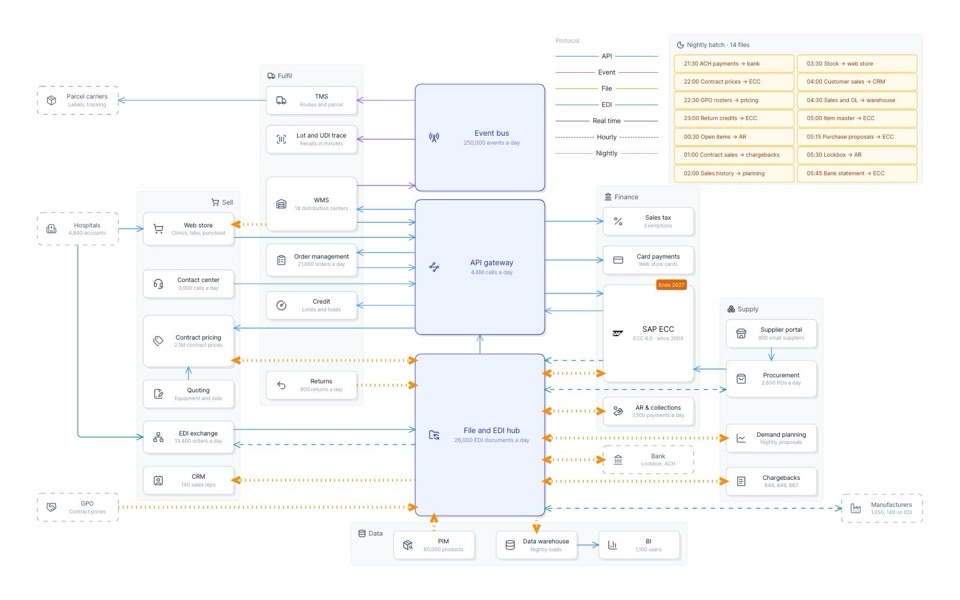
Integration landscape of a medical supply distributor
A medical distributor’s systems and hubs: how each connection moves, a late stock file, and the move from SAP ECC to S/4HANA.
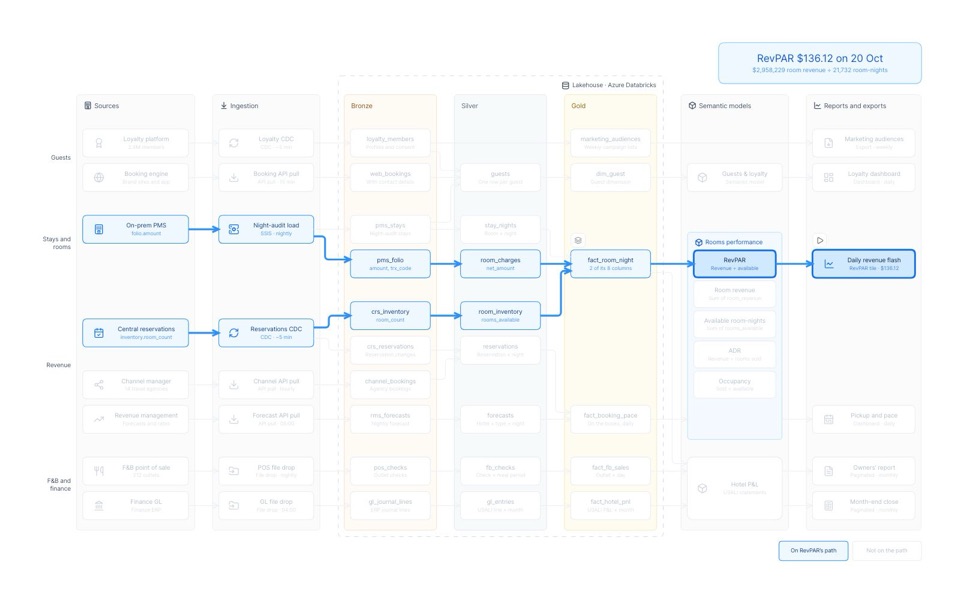
Data lineage map of a hotel group
A hotel group’s lakehouse: RevPAR traced to its source columns, guest data by classification, and a legacy job’s impact.
See you in the canvas
Unlock your team’s collaborative super powers.