IT management
IT asset management
IT asset management (ITAM) tracks the hardware, software and cloud resources an organization owns across their lifecycle, with cost, contracts and compliance.
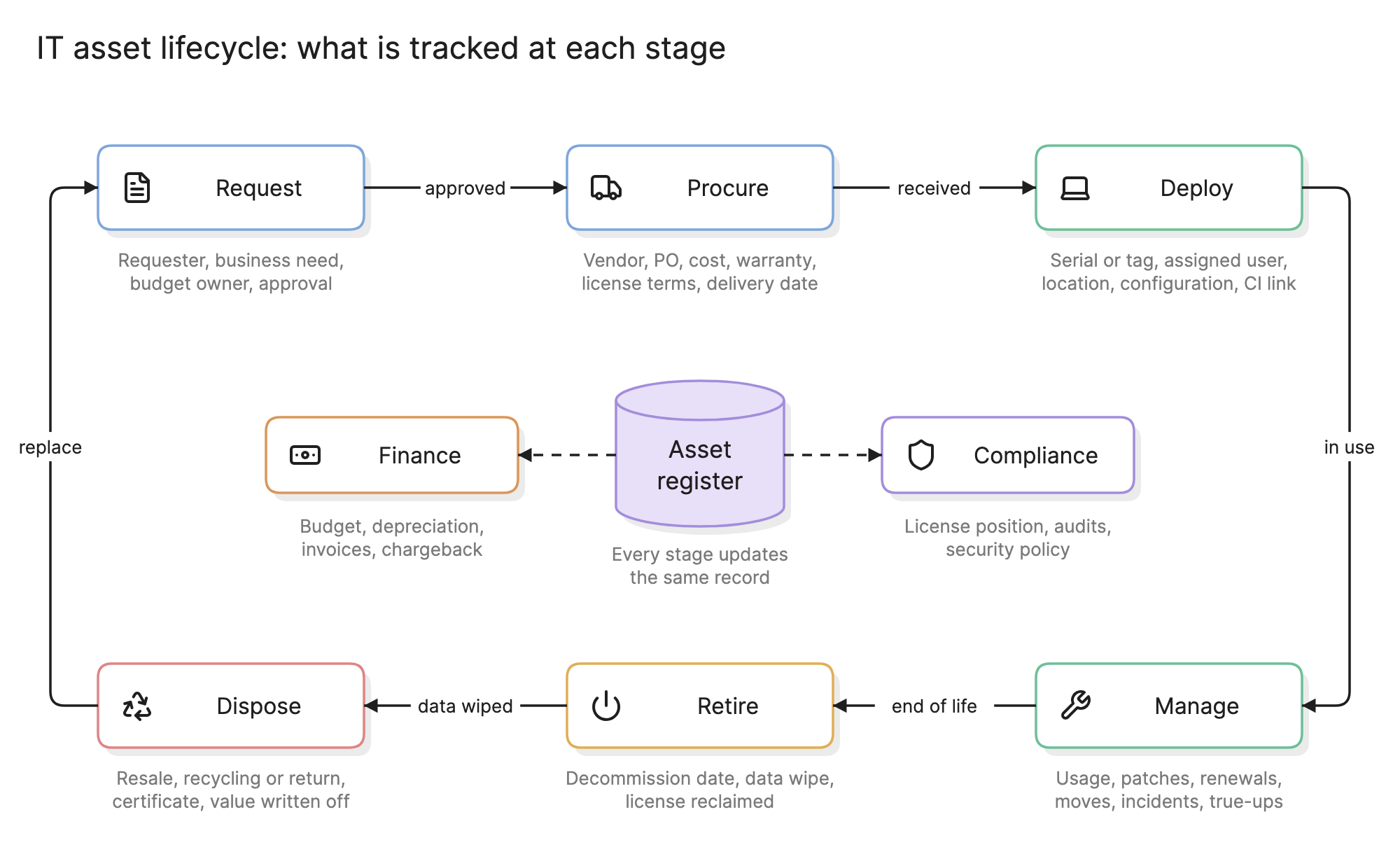
Organizations run IT asset management because its questions come up every week: what do we own, what are we paying for, who has it, is it still supported and will we pass the next vendor audit?
Why does IT asset management matter?
- Cost. Unused licenses, forgotten subscriptions and hardware sitting in cupboards are money.
- Compliance. Software vendors audit, and the penalty for being under-licensed is list price for the shortfall. A current license position turns an audit into a report.
- Security. You cannot patch a device you do not know about. The asset register is the list that security tooling checks itself against.
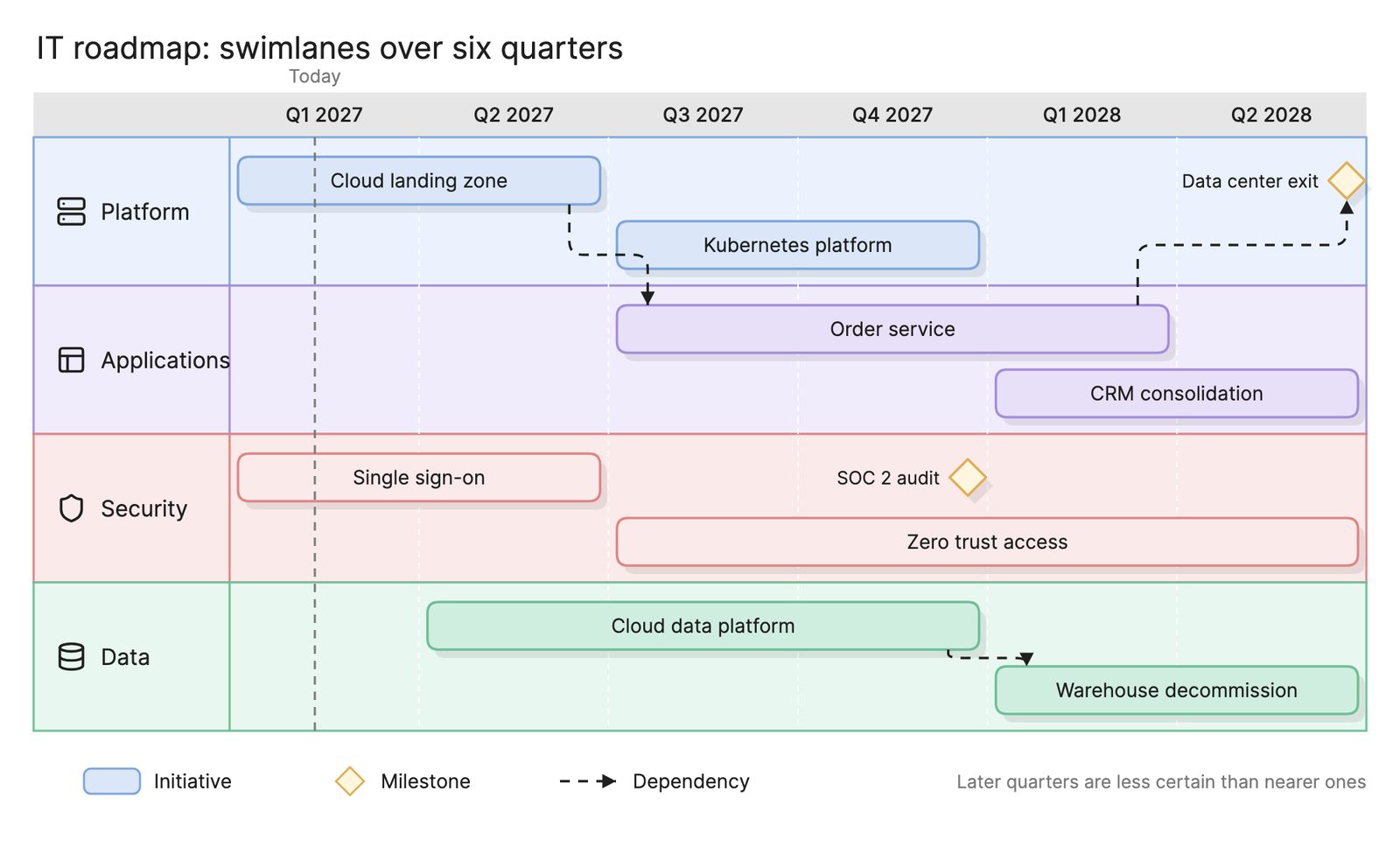
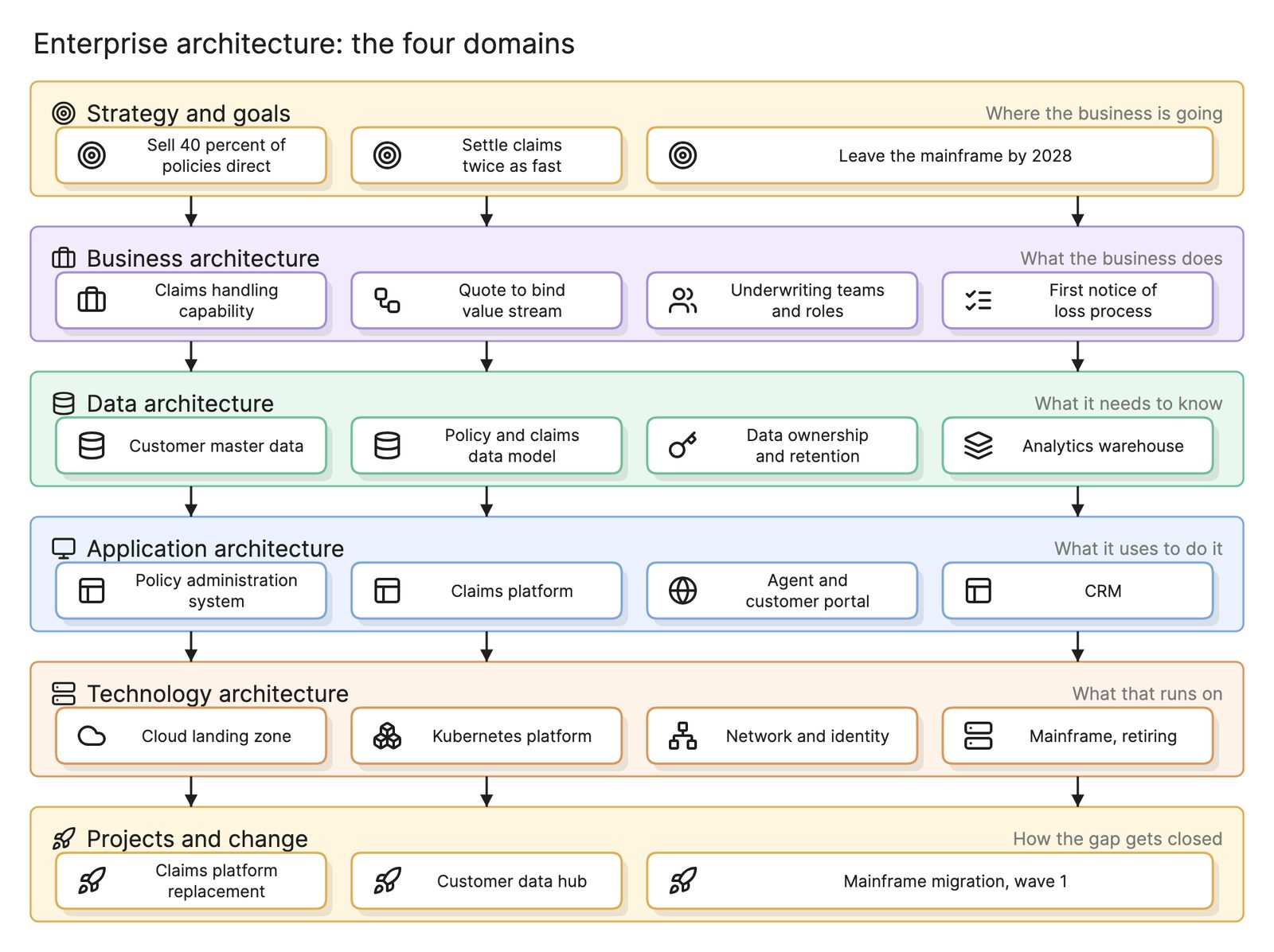
- Planning. Refresh cycles, contract renewals and end-of-support dates feed the IT roadmap, the current state in a current vs future state comparison and the evidence an architecture review board asks for before approving a change.
What does IT asset management cover?
Hardware assets
Laptops, servers, network devices, phones and peripherals. Each has a serial number, an asset tag, a purchase date and cost, a warranty, an assigned user or location and a lifecycle status.
Software assets
Installed software, SaaS subscriptions and the licenses that permit their use. Software asset management reconciles three numbers: what has been bought, what is installed or provisioned and what is actually used. The gap between the second and third is waste. The gap between the first and second is audit risk. Model API accounts and AI tool subscriptions are software assets too, and the AI governance inventory should link to them.
Cloud assets
Accounts, subscriptions, reserved and committed capacity and the tagging rules that attribute running resources to owners and cost centers. Cloud assets are not bought and depreciated, so ITAM here is about who can spend, what they have committed to and whether the bill can be allocated.
What is the IT asset lifecycle?
The diagram at the top of this page shows the lifecycle as a cycle of six stages. Each stage adds fields to the same asset record.
- Request. Someone asks for an asset. The record captures the requester, the business need, the budget owner and the approval.
- Procure. Purchasing raises an order. The record gains the vendor, purchase order, cost, warranty, license terms and delivery date.
- Deploy. The asset is received, tagged and handed over. The record gains the serial number or tag, assigned user, location and configuration, plus a link to the matching configuration item in the CMDB.
- Manage. The longest stage. Usage, patches, renewals, moves between users and incidents are recorded, and license counts are trued up against purchases.
- Retire. The asset reaches end of life or end of support. The record gains a decommission date, confirmation that data was wiped and a note that any license was reclaimed.
- Dispose. The asset is resold, recycled or returned to the lessor. The record gains the disposal certificate and finance writes off the remaining book value.
Finance reads the register for budgets, depreciation, invoices and chargeback. Compliance reads it for the license position, audit evidence and security policy.
How does ITAM differ from a CMDB and application portfolio management?
| Practice | Unit it tracks | Main question | Typical owner |
|---|---|---|---|
| IT asset management | An asset: a device, a license, a subscription | What do we own, what does it cost, are we compliant? | IT finance or procurement |
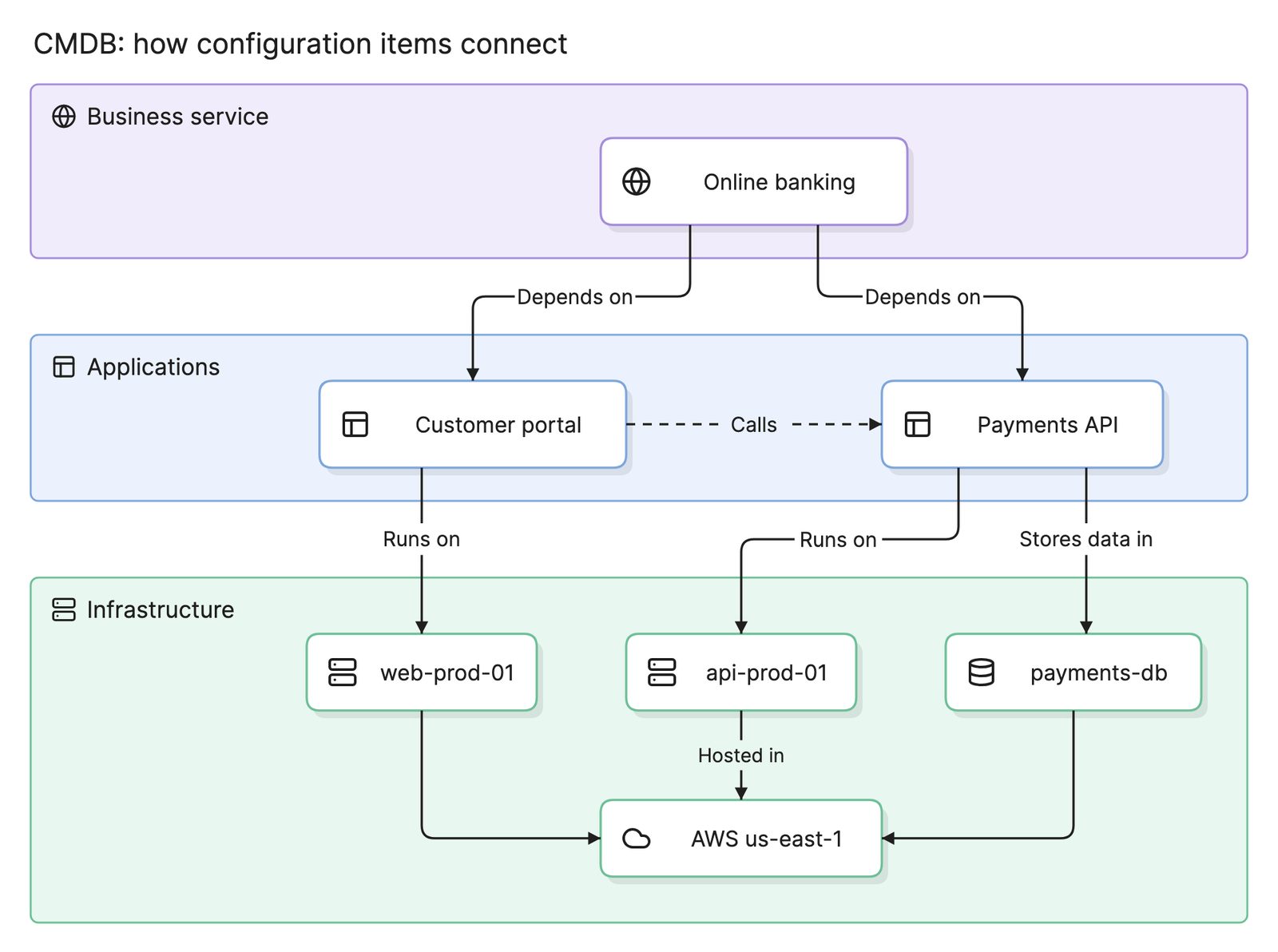
| CMDB | A configuration item and its relationships | What depends on this, and what breaks if it changes? | IT operations |
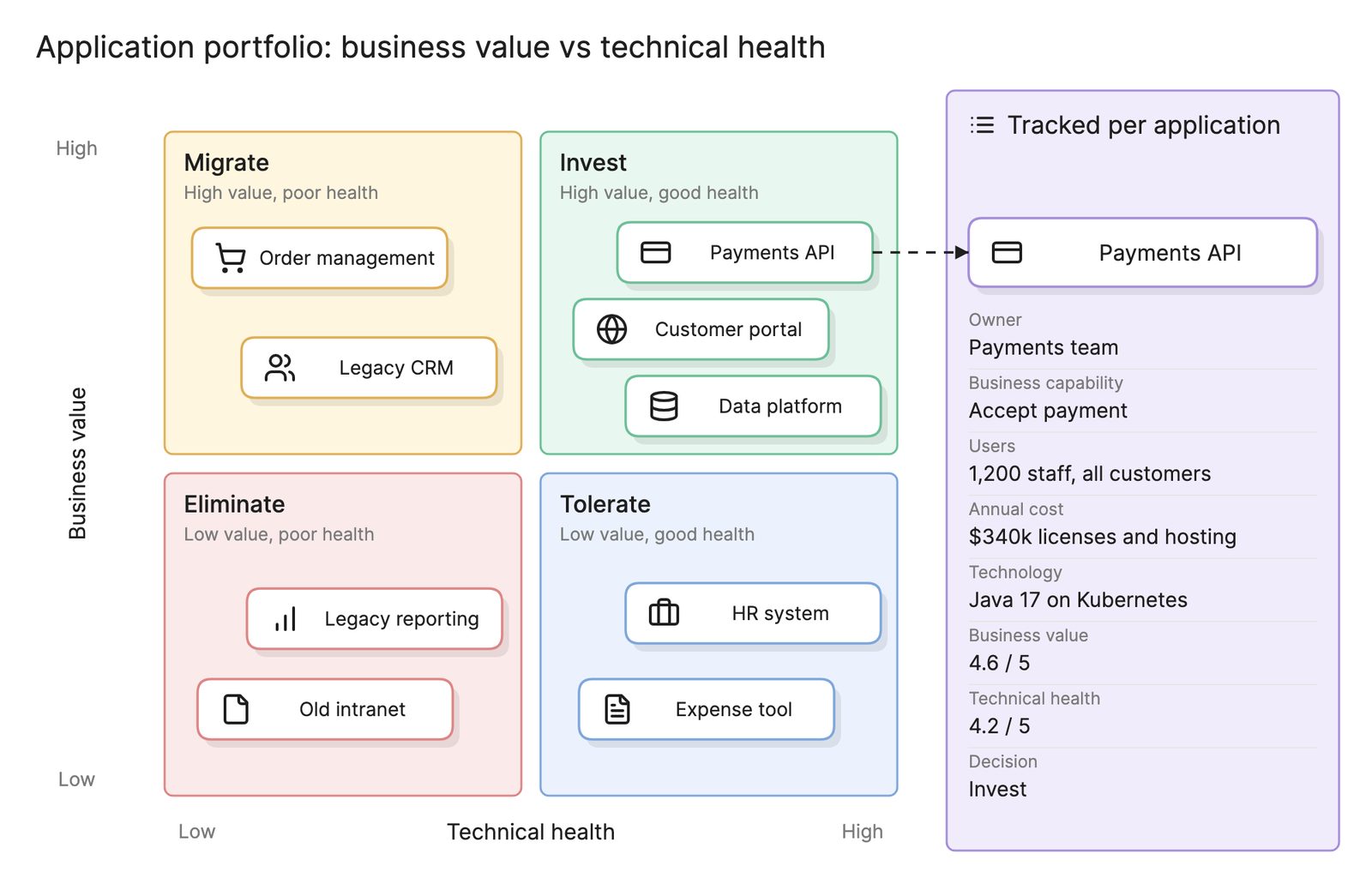
| Application portfolio management | An application and its business value | Which applications should we keep, invest in or retire? | Enterprise architecture |
A single server can be an asset with a warranty, a configuration item the payments API runs on and part of an application the portfolio has marked for retirement. The records should link, and the asset identifier is the natural key.
What is license management?
- Entitlements. What the contracts allow: a number of users, devices, cores or a subscription tier, with the metric that counts.
- Deployments. What is installed or provisioned, from discovery tools, endpoint agents and SaaS admin consoles.
- Usage. What is actually used, from the same sources plus login data.
- Effective license position. Entitlements minus deployments per product. Negative means audit exposure. Strongly positive means waste, and reclaiming it at renewal is where most ITAM savings come from.
How do you set up IT asset management?
- Define what counts as an asset. A threshold by value, or a list of classes.
- Pick the register. An ITAM tool, the ITSM platform’s asset module or, for a small estate, a well-governed spreadsheet.
- Automate discovery. Endpoint agents, network discovery, cloud account integrations and SaaS connectors keep the register current.
- Load contracts and entitlements. Without them, the register knows what exists but not what is allowed.
- Link to the CMDB. Assets that are also configuration items should share an identifier.
- Report. License position by product, assets by age and spend by cost center. Reports that someone acts on keep the data honest.
What are common IT asset management mistakes?
- Starting at deployment. Assets that enter the register only when an agent sees them have no cost, no contract and no owner.
- Treating the CMDB as the asset register. Configuration items lack financial and contract fields, and assets with no configuration clutter the CMDB.
- Never disposing. Retired assets that stay in the register inflate license counts and hide the technical debt of hardware and software that should have been replaced.
What tools help with IT asset management?
- ITAM and ITSM platforms. Dedicated tools and the asset modules of service management platforms hold the register, run discovery and calculate license positions.
- Spreadsheets and hand-drawn diagrams. Fine for a small estate or a one-off review, and the usual starting point. They lose accuracy as soon as the estate changes.
- AI diagramming tools. Tools like Eraser draw maps from a CMDB, cloud accounts and other data sources, so the assets an organization owns can be seen next to the applications and services that run on them.
Frequently asked questions
-
What is the difference between ITAM and a CMDB?
IT asset management tracks what the organization owns, what it cost, who holds it and when its contract or warranty ends. A CMDB tracks how components are configured and how they depend on each other to deliver services. Many assets are also configuration items and the two records should link, but they answer different questions.
-
What is software asset management?
Software asset management (SAM) is the part of ITAM that deals with software licenses and subscriptions. It reconciles what is installed or in use against what has been bought, so the organization can show compliance in a vendor audit and stop paying for licenses nobody uses. SaaS has made it the largest cost area in most ITAM programs.
-
Are cloud resources IT assets?
Yes, though they behave differently. A virtual machine or a managed database is not bought and depreciated, it is rented by the hour, and automation can create and destroy it many times a day. ITAM for cloud therefore tracks accounts, subscriptions, reserved capacity and tagging rules rather than individual serial numbers.
-
Is ITAM part of ITIL?
ITIL describes IT asset management as one of its practices and links it to service configuration management, but ITAM existed before ITIL and does not depend on it. Standards such as ISO 19770 cover ITAM processes and software identification tags in their own right, and many organizations run ITAM without the rest of ITIL.