IT management
Application rationalization
Application rationalization is the process of assessing every application an organization runs and deciding which to keep, consolidate, replace or retire.
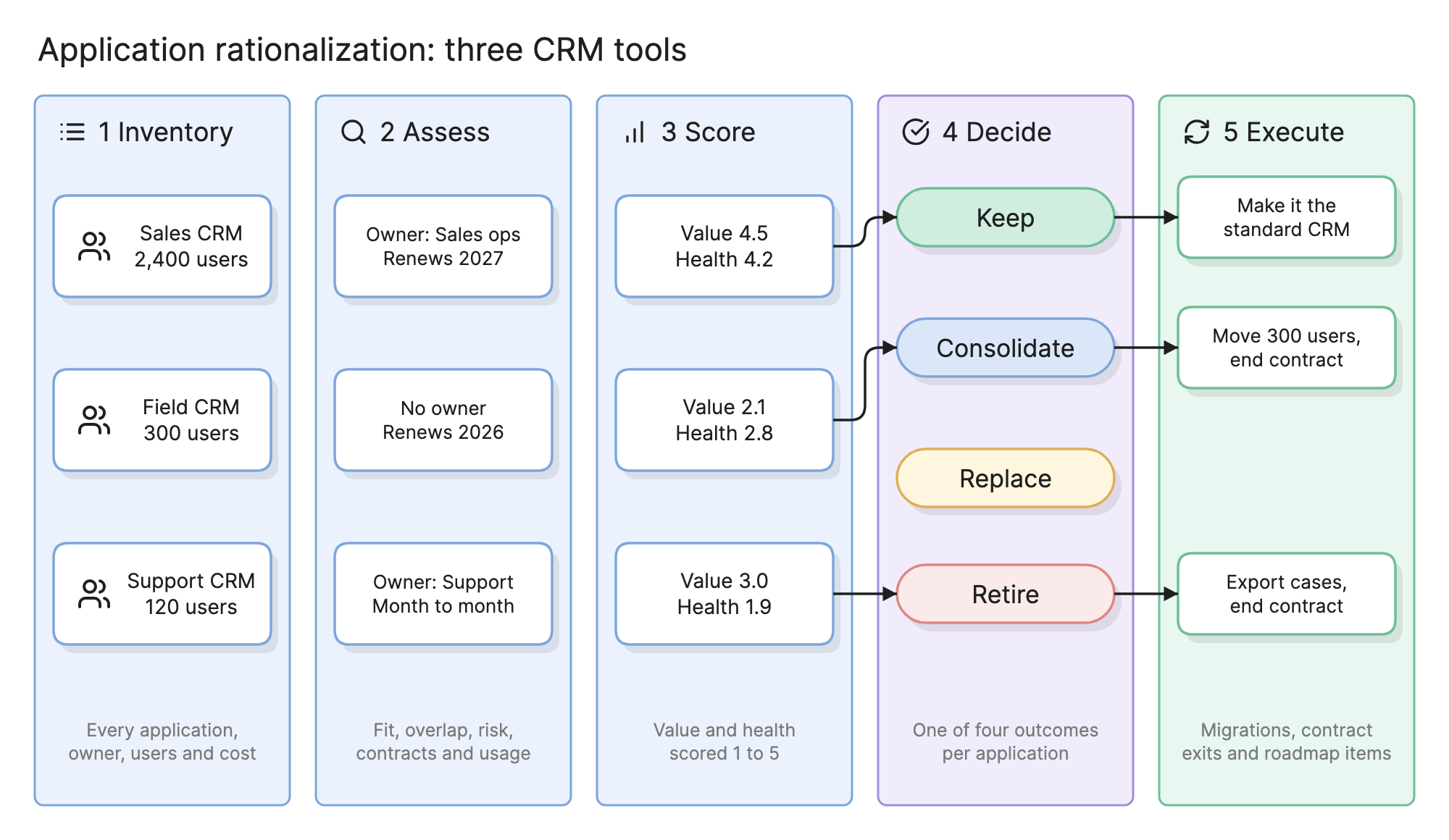
Every organization that has grown, merged or let teams buy their own tools ends up with overlap: three CRM systems, four ways to sign a document, two data warehouses. Application rationalization is the structured way to decide which of those to keep and what to do with the rest, with the evidence to defend the answer.
Why do organizations rationalize applications?
- Cost. Each duplicate carries licenses, hosting, support and the integration work to keep it talking to everything else.
- Mergers and acquisitions. Two companies bring two of everything. Rationalization is how the combined estate becomes one.
- Cloud and platform moves. Migrating an application you intend to retire is wasted money. Rationalize before you migrate.
- Risk and compliance. Unowned or unsupported applications are the ones that fail audits and host breaches.
- Simplicity. Fewer applications means fewer integrations, fewer skills to maintain and a landscape engineers can hold in their heads.
What criteria does application rationalization use?
Rationalization draws its data from application portfolio management, which should already hold an inventory and scores. The criteria usually combine:
- Business value. Which capability it supports, how many people use it and what breaks without it.
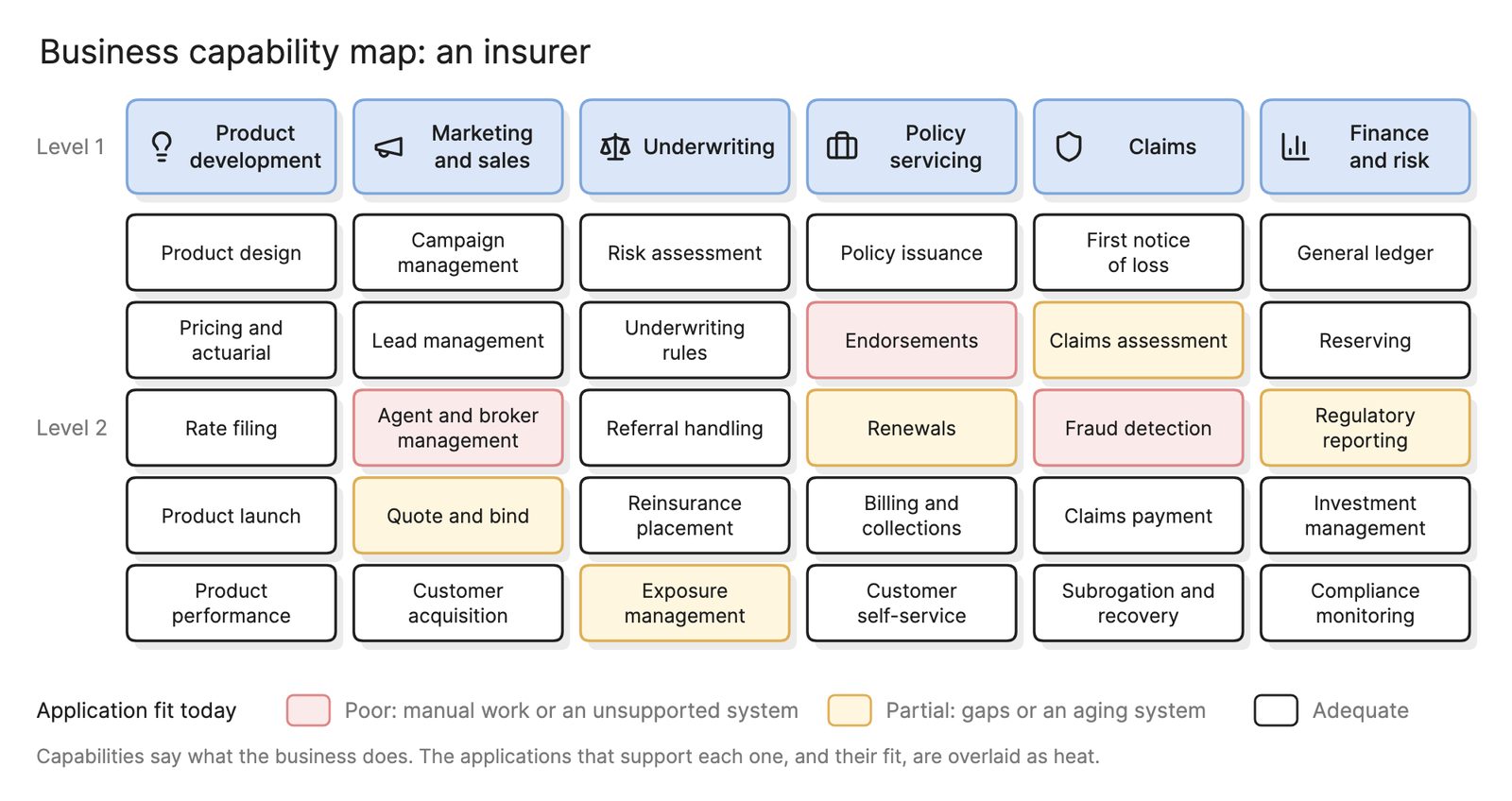
- Functional fit and overlap. Whether it does the job well and whether something else already does the same job. Mapping applications to a business capability map makes overlap visible: three applications under one capability is a candidate.
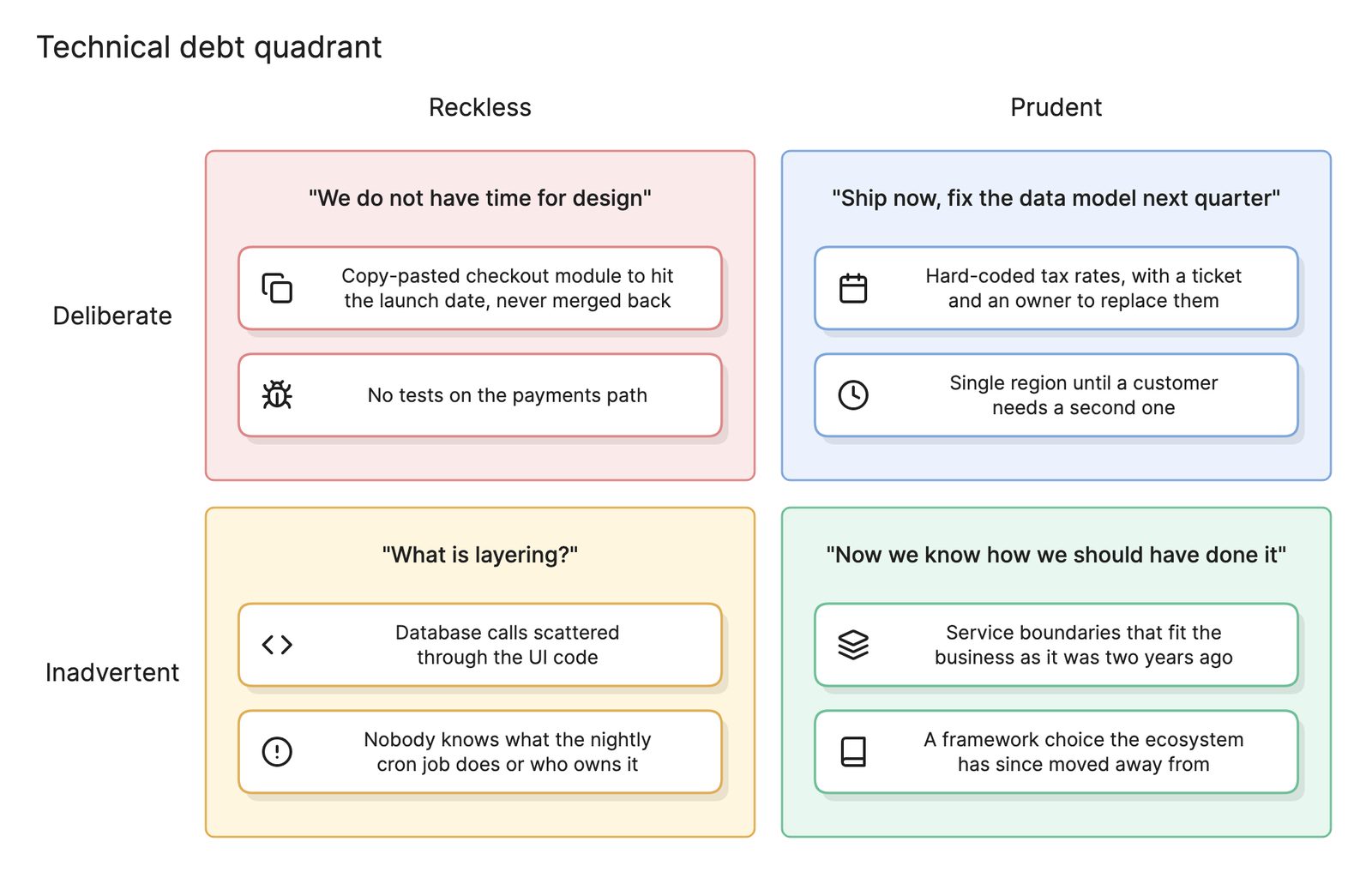
- Technical health. Version currency, vendor support, architecture and accumulated technical debt.
- Cost. The annual total, including the people who maintain it.
- Contracts and timing. Renewal dates, exit clauses and notice periods, usually held in IT asset management, set the schedule more often than the scores do.
- Dependencies. What calls it and what it calls, from the application dependency map, the service map and the CMDB. A retirement is a different project if six other systems read from the thing.
What are the decision options?
| Decision | Meaning | When it fits |
|---|---|---|
| Keep | Retain it and continue to invest or maintain | High value, healthy, no better alternative |
| Consolidate | Fold its users and data into another application that does the same job | Overlap with a stronger application |
| Replace | Retire it and adopt a new product or build for the same need | High value but poor health, and nothing in the estate fits |
| Retire | Switch it off, archive or migrate its data, end the contract | Low value, or its function is no longer needed |
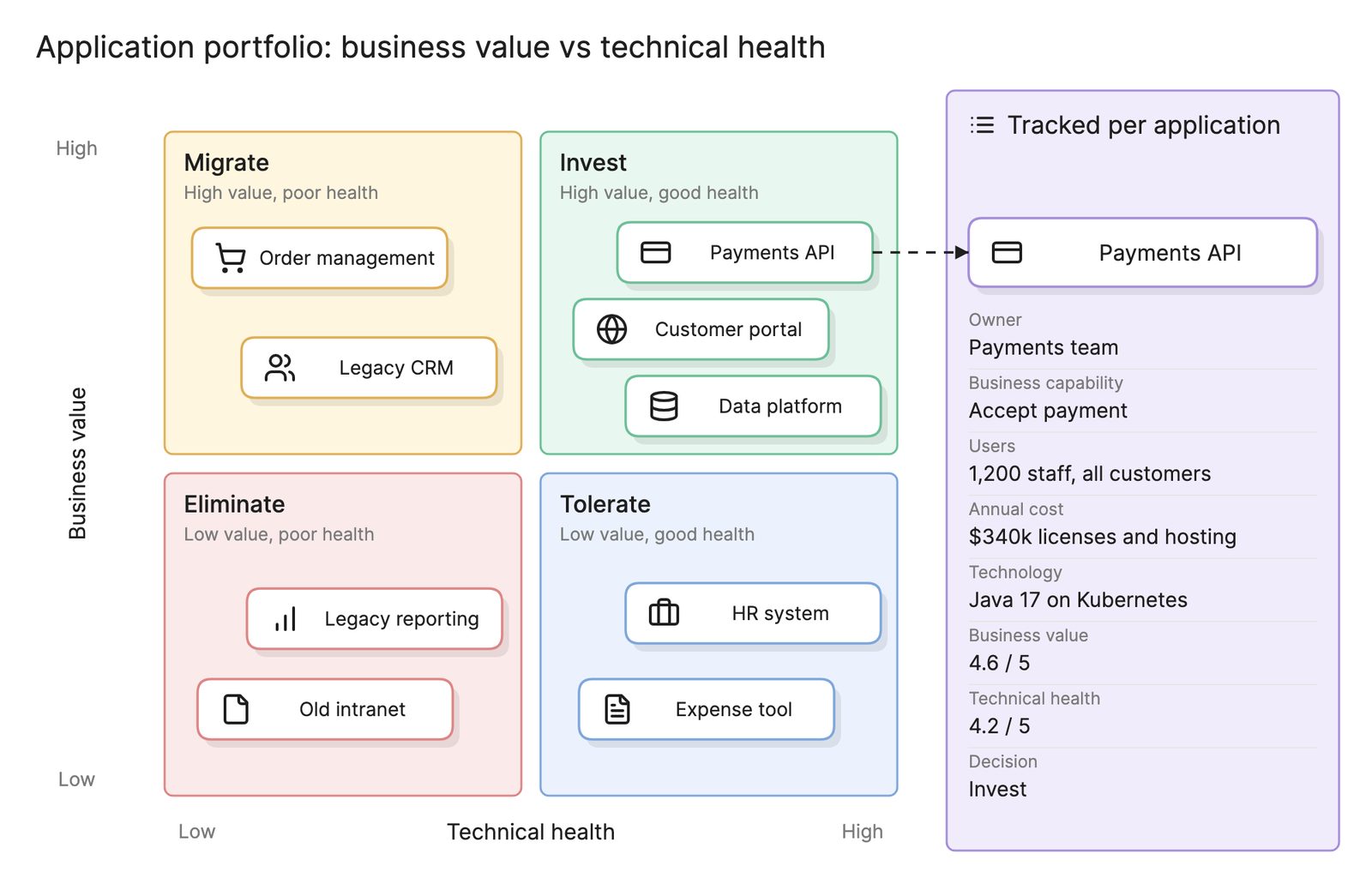
Some frameworks add tolerate (keep it but stop investing) as a fifth outcome, and the TIME model’s invest, tolerate, migrate and eliminate map closely onto these four.
How does application rationalization work?
The diagram at the top follows five stages.
- Inventory. Confirm the list of applications in scope, with owners, user counts and cost. If no portfolio exists, this stage is most of the work.
- Assess. Gather the criteria above for each application: fit, overlap, ownership, contracts, usage and dependencies.
- Score. Rate business value and technical health on a shared scale, with the rubric written down.
- Decide. Assign one of the four outcomes in a workshop with business and technical owners, and record the reasoning.
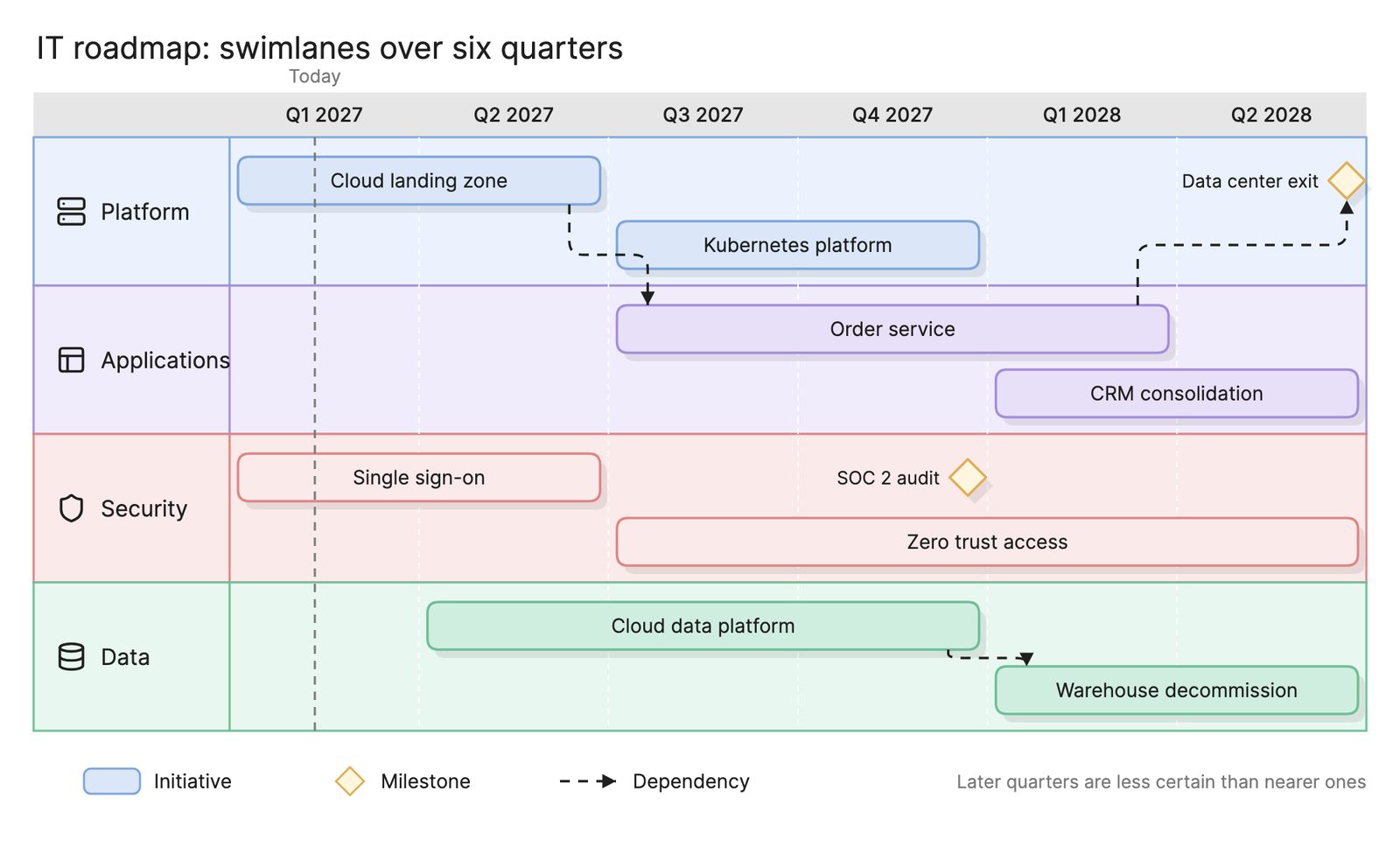
- Execute. Turn decisions into IT roadmap items: migrations, data exports, contract notices and the dates each depends on.
What does a worked example look like?
A company finds it runs three CRM tools. Sales CRM has 2,400 users, an owner in sales operations and a contract to 2027. Field CRM was bought by a regional team, has 300 users, no current owner and renews in 2026. Support CRM has 120 users in customer support on a month-to-month contract and holds case history the support team relies on.
Assessment shows the three overlap almost completely on contact and account management. Scoring gives Sales CRM 4.5 for value and 4.2 for health. Field CRM scores 2.1 and 2.8. Support CRM scores 3.0 for value, because of the case data, and 1.9 for health, because the vendor has stopped updating it.
The decisions: keep Sales CRM and make it the standard; consolidate Field CRM into it by moving 300 users before the 2026 renewal and letting the contract lapse; retire Support CRM after exporting its cases into the support module of Sales CRM. Replace is not needed, because an application in the estate already covers every need. Execution puts three items on the roadmap, each with an owner and a date set by the contracts, and the portfolio records the outcome so nobody repeats the analysis next year.
What are common application rationalization pitfalls?
- Starting without an inventory. Teams spend the budget discovering what exists and never reach a decision.
- Scoring in private. Decisions made by IT alone get reversed the first time a business owner objects.
- Ignoring the data. Retiring an application is easy. Migrating fifteen years of records out of it is the project.
- Underestimating dependencies. The application with the fewest users is often the one that feeds the nightly reports.
- Deciding and not executing. A decision list with no roadmap items, owners or dates changes nothing.
- Treating it as a one-off. Overlap returns. Rationalization works best as a periodic review of the portfolio, which is also how enterprise architecture teams keep it funded.
What tools help with application rationalization?
- Spreadsheets and workshops. The usual way to run a first exercise, and adequate for a few dozen applications if someone owns the sheet afterwards.
- Application portfolio management platforms. They hold the inventory and scores, support the TIME matrix and track decisions through to execution. The analysis is only as good as the data kept in them.
- Connected architecture maps. Tools like Eraser draw the application landscape and its dependencies from live data, so the team deciding to retire an application can see what still calls it before the contract notice goes out, not after.
Frequently asked questions
-
What is the difference between application rationalization and application portfolio management?
Application portfolio management is the continuous record: the inventory, owners, costs and scores for every application. Application rationalization is the decision exercise run on that record, usually for one capability area or business unit at a time, ending in keep, consolidate, replace or retire decisions. A portfolio without rationalization is a list, and rationalization without a portfolio starts by building one.
-
How long does application rationalization take?
A few weeks for one capability area if the portfolio is current, and six to twelve months for a whole estate when the inventory has to be built first. Execution takes longer than analysis, because migrations and contract exits are scheduled around renewal dates, so the full benefit arrives over one or two budget cycles.
-
Who should be involved in application rationalization?
Enterprise architecture usually runs it, but the decisions need the business owner and technical owner of each application, finance for cost and contract data and procurement for notice periods and exit terms. Security and compliance join when an application holds regulated data. Decisions made by IT alone get reversed the first time a business owner objects.
-
What is the difference between retiring and consolidating an application?
Retiring switches an application off because its function is no longer needed or is already covered elsewhere, with its data archived or exported. Consolidating moves its users and data into another application that does the same job before switching it off. Consolidation is a migration project, while retirement is mostly a data and contract project.