Software architecture
MVC architecture
MVC architecture divides an application into a model that holds data and rules, a view that renders it and a controller that turns user input into changes.
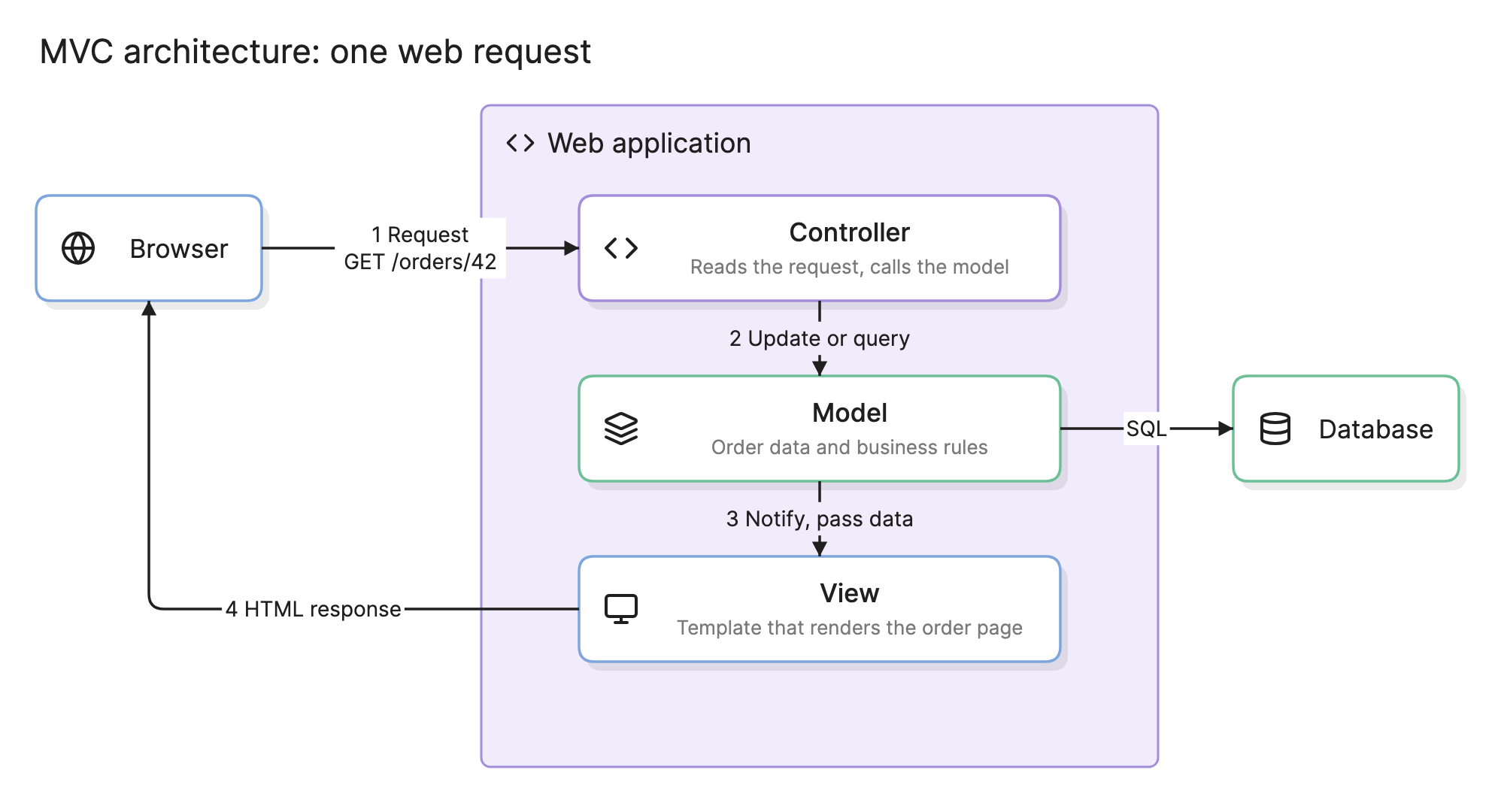
Teams use MVC because it answers the first question every application faces: where does this code go? Keeping data and rules apart from the screens that show them means a change to one rarely forces a change to the other, and each part can be tested without the rest.
What are the parts of MVC architecture?
- Model. The application’s data and the rules that govern it. An
Ordermodel knows what an order contains, which status changes are allowed and how to load and save itself. It knows nothing about screens. - View. What the user sees: an HTML template, a native screen or a JSON response. A view reads from the model and renders it, and holds no business rules of its own.
- Controller. The part that receives input, such as an HTTP request or a button press, decides which model operation it means and chooses the view that should respond.
The three parts are joined by a few fixed relationships. The controller depends on the model and the view. The view depends on the model. The model depends on neither, which is what makes it reusable across a web view, a mobile view and an API.
How does an MVC request work?
Follow the numbers in the diagram at the top of this page. The browser sends GET /orders/42, and the framework’s router hands the request to the orders controller (1). The controller asks the Order model for order 42 (2). The model runs the query against the database, applies any rules such as hiding cancelled orders from customers and returns the data. The controller passes that data to the order view (3), which fills a template and returns the HTML response to the browser (4).
In the original desktop form of the pattern, the model notifies the view directly whenever it changes, and the view redraws. Web frameworks cannot push to a browser mid-request, so the controller carries the data from model to view instead. Both are called MVC, which is why diagrams of the pattern disagree about the arrows.
What are the variants of MVC?
| Pattern | Middle component | How the view updates | Typical use |
|---|---|---|---|
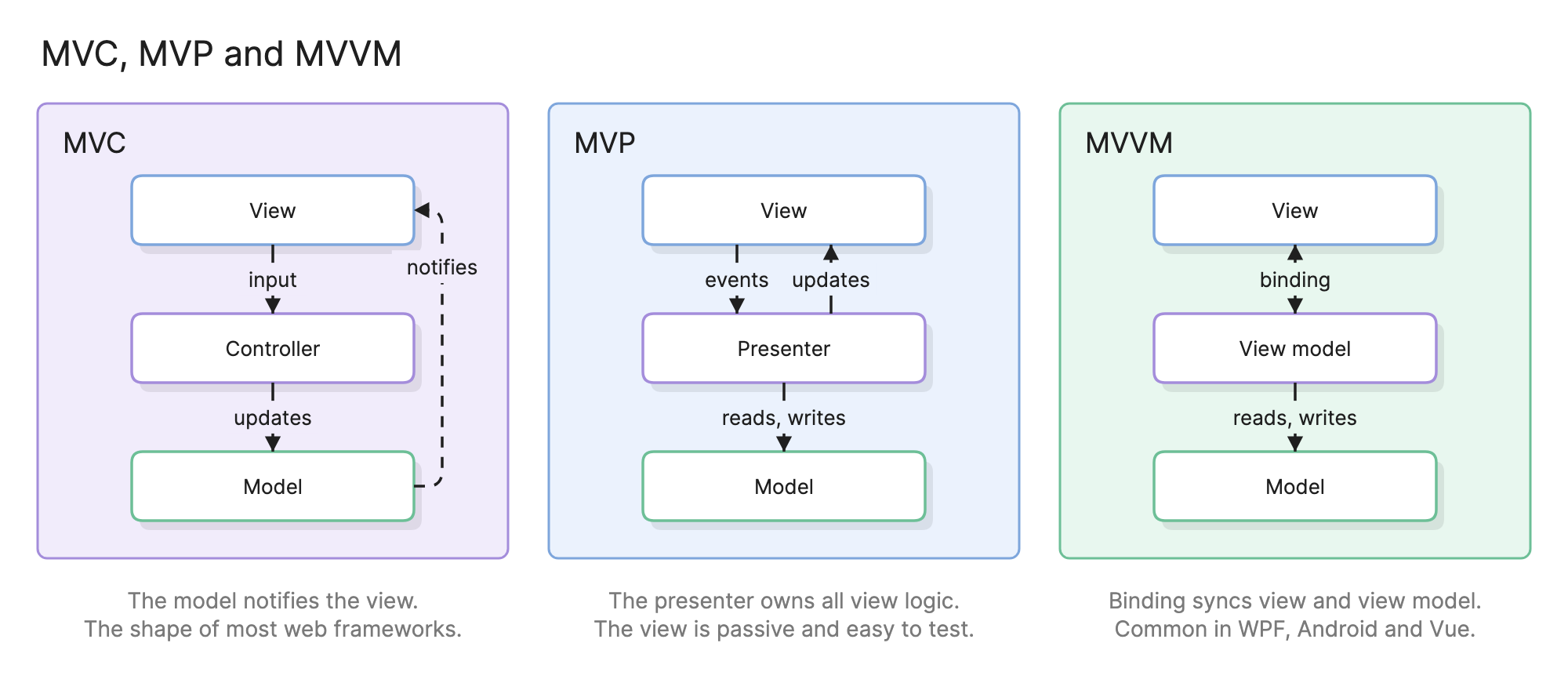
| MVC | Controller | The model notifies the view, or the controller passes data to it | Server-rendered web frameworks |
| MVP | Presenter | The presenter calls methods on a passive view interface | Desktop and older mobile applications that need testable views |
| MVVM | View model | Data binding keeps the view and the view model in sync | WPF, Android, Vue and other binding frameworks |
MVP makes the view as thin as possible so that all logic sits in a presenter that can be unit tested without a user interface. MVVM goes one step further by removing the explicit update calls: the view binds to properties on the view model, and the framework redraws when they change. The model is the same in all three.
How do you apply MVC?
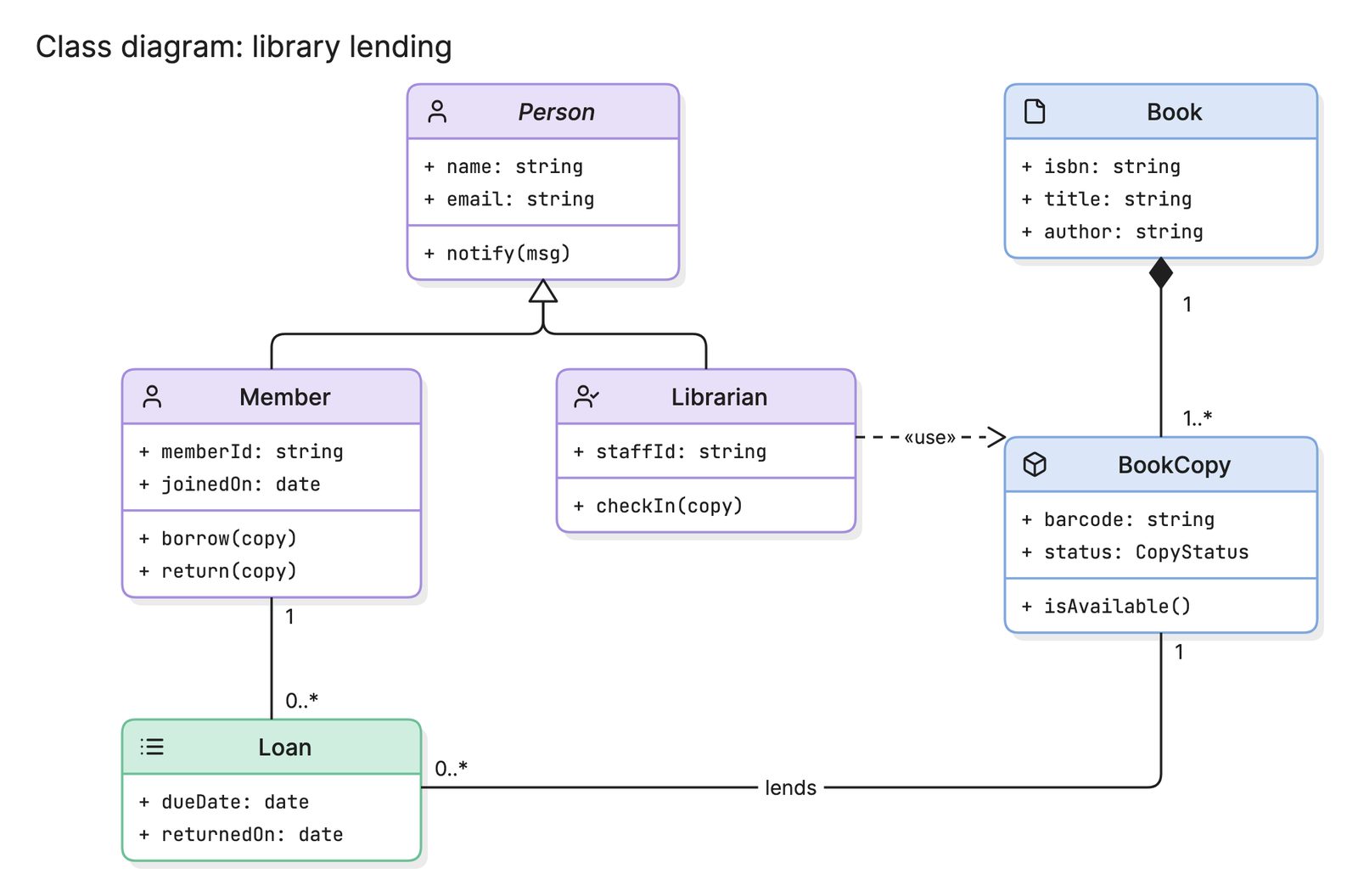
- Start with the model. Name the entities and the rules that apply to them before writing a screen. A class diagram of the model is a good first artifact.
- Map input to controllers. Group related actions, such as listing, showing and updating orders, into one controller.
- Write views that only render. If a template needs a loop and a conditional, fine. If it needs a calculation, move the calculation into the model or a helper.
- Keep controllers thin. A controller should read the request, call one or two model methods and pick a view. Anything longer belongs in the model.
- Draw the request cycle. An architecture diagram of one request through the three parts is the fastest way to show a new engineer where code goes.
What are common MVC mistakes?
- Fat controllers. Business rules accumulate in controllers because that is where the request arrives. Over time the model becomes a bag of fields and the controllers become untestable.
- Logic in views. A template that computes a discount has copied a rule that already exists, or should exist, in the model.
- Models that know about HTTP. A model that reads request parameters or sets cookies can no longer be reused by a job or an API.
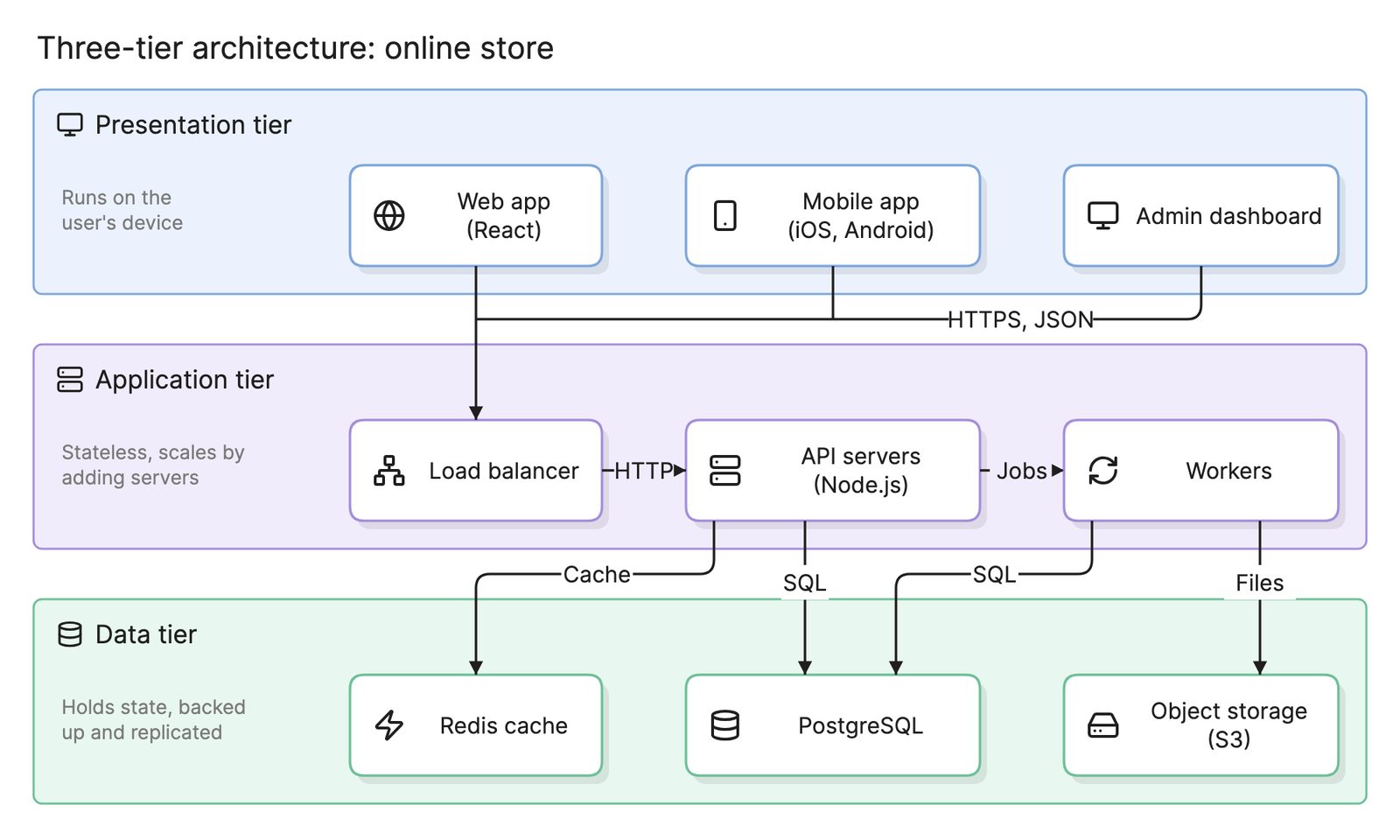
- Confusing MVC with tiers. MVC organizes code inside one application. It says nothing about which hosts the parts run on, which is the job of three-tier architecture.
How does MVC compare with other architectures?
| Pattern | What it organizes | Relationship to MVC |
|---|---|---|
| Three-tier architecture | Where the parts of a system run | MVC usually lives inside the application tier |
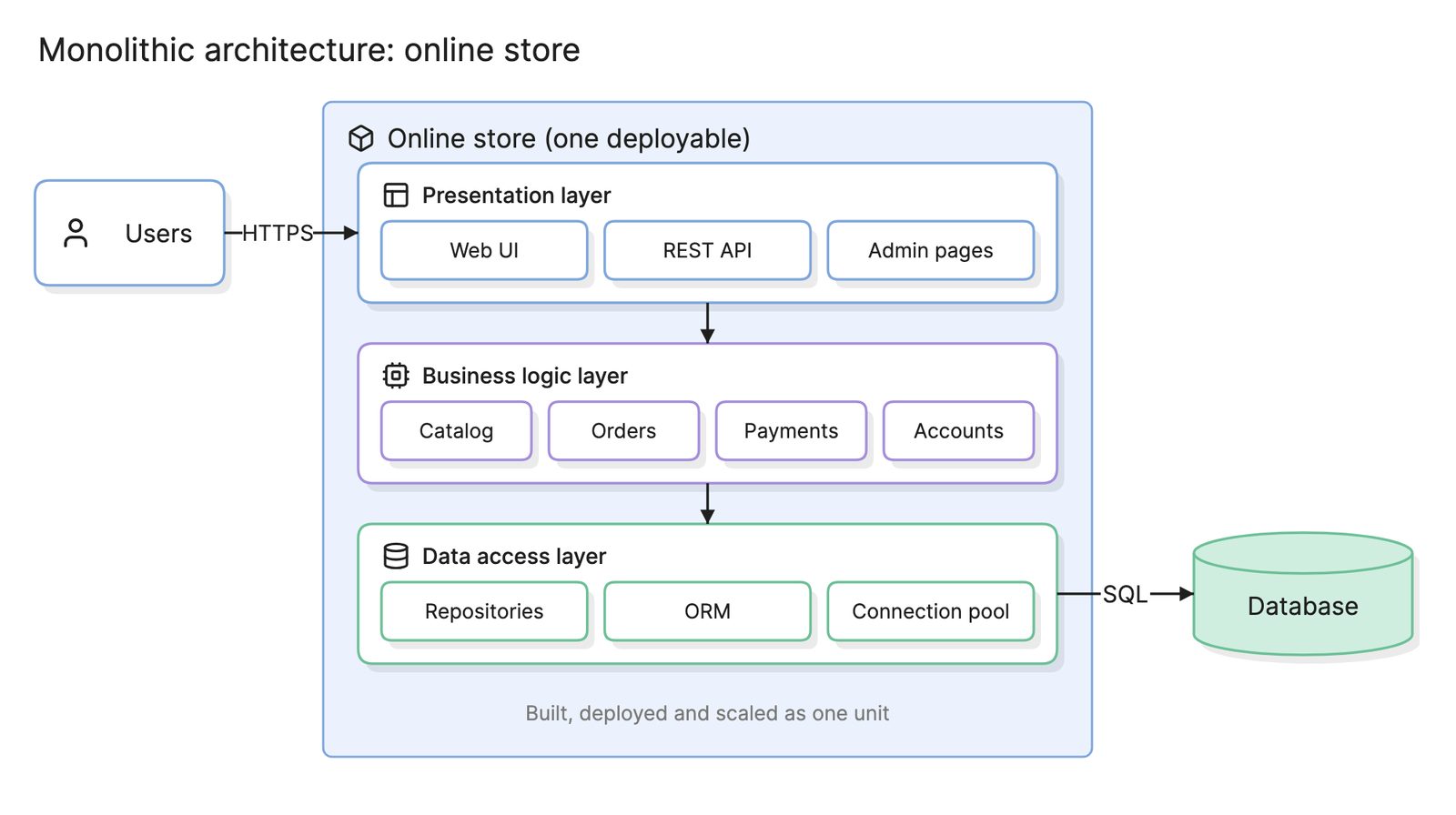
| Monolithic architecture | How many deployables a system has | Most MVC frameworks produce one monolith |
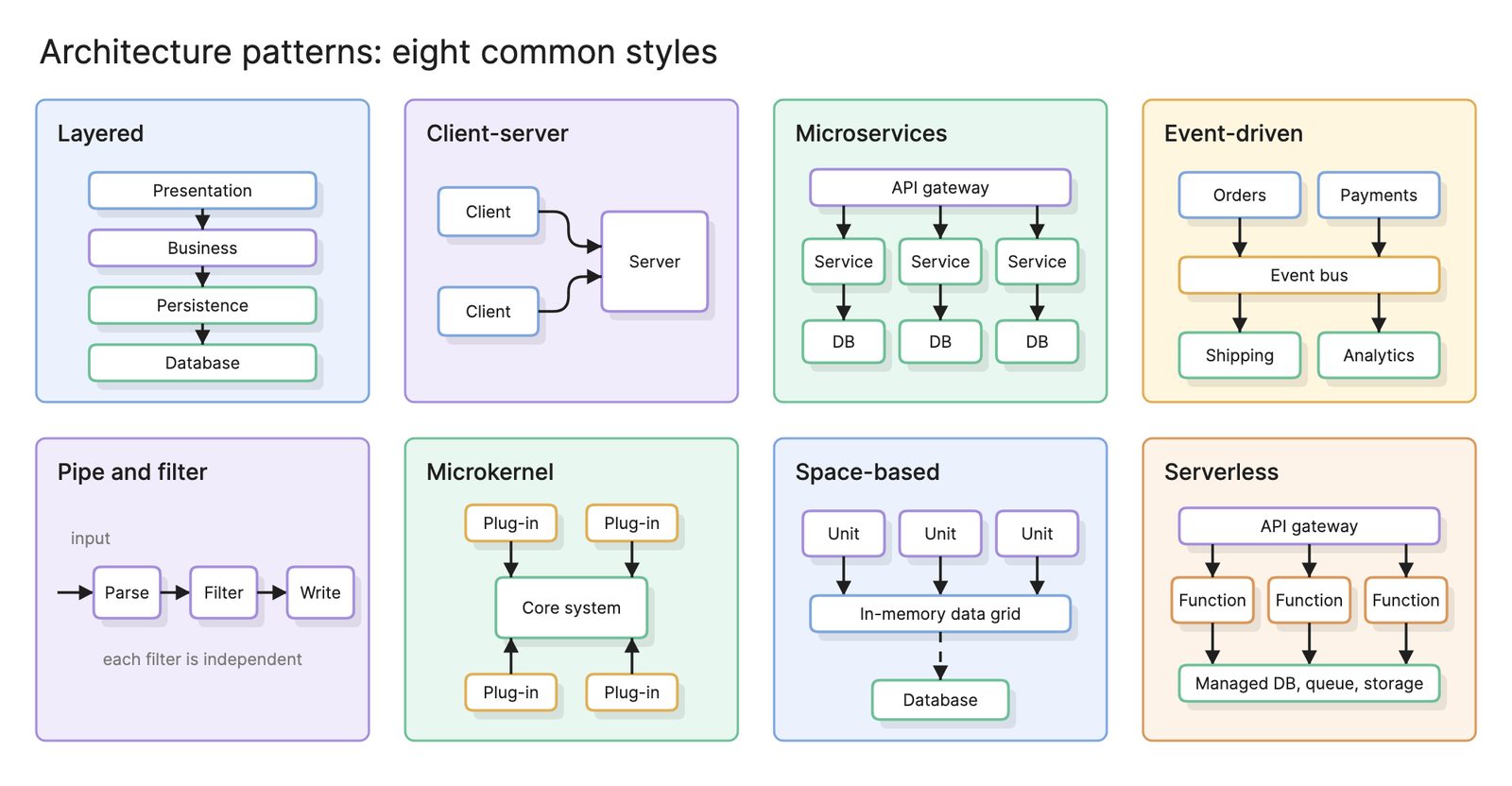
| Client-server architecture | Who makes requests and who answers them | The server side of a web application is often MVC |
| Layered architecture | Which code may call which | MVC is a layered pattern with three named layers |
| Microservices | How a system is split into services | Each web-facing service can be MVC inside, behind an API gateway |
In a system architecture diagram, an MVC application is a single box, and system design decides how that box is deployed and scaled. The pattern only becomes visible when you zoom in to the components inside it, which is level 3 of the C4 model.
What tools can you use to document an MVC architecture?
- Framework generators. Rails, Django and similar frameworks create the folders and base classes for you, which enforces the pattern better than any diagram.
- UML tools. A class diagram for the model and a sequence diagram for one request are the two standard views of an MVC application.
- AI diagramming tools. Tools like Eraser turn a description of your models, controllers and views into a component diagram or a sequence diagram you can keep editing as the application grows.
For more on this kind of diagram, see design docs.
Frequently asked questions
-
What does MVC stand for?
Model, view, controller. The model holds the application's data and the rules for changing it, the view presents that data to the user and the controller receives input and decides what the model and view should do about it. Trygve Reenskaug described the pattern at Xerox PARC in 1979 for Smalltalk desktop applications.
-
Is MVC an architecture pattern or a design pattern?
Both terms are used. MVC is usually listed among architecture patterns because it shapes a whole application, but it only describes the user-facing part of a system. A system can be three-tier at the deployment level and MVC inside the application tier at the same time.
-
What is the difference between MVC and MVVM?
In MVC the controller handles input and the model notifies the view. In MVVM a view model exposes the state the view needs, and a data binding layer keeps the two in step automatically, so neither the view nor the view model calls the other directly. MVVM suits user interface frameworks with built-in binding, such as WPF, Android and Vue.
-
Which frameworks use MVC?
Ruby on Rails, Django, ASP.NET MVC, Spring MVC and Laravel all organize applications as models, views and controllers, although each interprets the pattern a little differently. Most of them follow the web variant shown on this page, in which the controller passes data to the view rather than the model notifying it.